


5 Best Ways to Carry IWB Comfortably All Day
Table of Contents
- Why IWB Carry Hurts (And What Actually Fixes It)
- 1. Appendix Carry vs 4 O'clock: Pick the Right Position First
- 2. Get a Quality Kydex Holster With Adjustable Retention
- 3. Dial In Your IWB Holster Cant and Ride Height Adjustment
- 4. Choose the Best Gun Belt for Concealed Carry
- 5. Add a Concealment Wing and Wedge to Reduce Printing
- Preventing Chafing and Skin Irritation During Daily Carry
- Frequently Asked Questions
Last Updated: October 1, 2026
Why IWB Carry Hurts (And What Actually Fixes It)
Most inside-the-waistband discomfort is not a holster problem. It is a positioning, belt, and hardware problem that shows up at the holster. That distinction matters, because it explains why so many people cycle through holsters looking for comfort and end up with a drawer full of expensive plastic. This guide from Lindahl Holsters breaks down the five best ways to carry IWB comfortably, and each one targets a different part of the discomfort equation for anyone who chooses to carry IWB daily.
Inside-the-waistband (IWB) carry is a method of concealing a firearm inside the waistband of your pants, secured by a holster that sits between your body and your belt. The holster is only one variable. Ride height, cant angle, belt stiffness, body geometry, and clothing profile all push on the same problem.
Here is what most guides get wrong: they treat comfort as a holster shopping decision. In practice, the same holster can be miserable at 3 o'clock and comfortable at 4 o'clock, or painful with a flimsy dress belt and fine with a proper gun belt. Fix the system, not just the holster.
1. Appendix Carry vs 4 O'clock: Pick the Right Position First
The right carry position is the one that matches your body geometry, not the one with the loudest online following. Appendix carry and 4 o'clock carry, sometimes called strong-side hip carry, solve concealment in opposite ways. Try both before you commit to a holster order.
Appendix Carry: Pros, Cons, and Who It Works For
Appendix carry places the holster inside the waistband at the front of the body, roughly between the hip bones. It offers the fastest draw stroke, the best firearm accessibility while seated or driving, and strong concealment under an untucked shirt.
The tradeoffs are real. The muzzle orientation sits near the femoral artery, so a quality holster with full trigger guard coverage is non-negotiable. It also punishes anyone carrying extra weight around the midsection. A common mistake is forcing appendix carry because it looks best on social media when a different position would suit your frame better.
4 O'Clock Carry: Pros, Cons, and Who It Works For
Strong-side hip carry at the 4 o'clock position, just behind the hip, is the most forgiving position for most body types. The grip tucks naturally against the curve of the back, which reduces printing. Drawing feels familiar to anyone with range experience.
The drawbacks: the draw stroke is slower, and the holster digs into the seat back when you drive. Kidney carry, which sits slightly further back toward the kidney, amplifies both the concealment benefit and the seated discomfort.
| Position | Draw Speed | Best For | Main Drawback |
|---|---|---|---|
| Appendix | Fastest | Slim builds, seated carry | Requires strict trigger guard coverage |
| 4 o'clock (strong-side hip) | Moderate | Most body types | Digs in when seated |
| Kidney carry | Slowest | Deep concealment | Pressure on the kidney area |
2. Get a Quality Kydex Holster With Adjustable Retention
A quality Kydex holster with adjustable retention is the foundation of comfortable daily carry. Kydex holds its shape, resists sweat, and gives you a consistent draw stroke that leather cannot match over years of use. Retention you can tune means the holster grips your specific firearm the same way every time.
What most guides miss is that a loose holster causes more discomfort than a tight one. When retention is too light, the gun shifts as you move, and that constant micro-movement creates hot spots. Adjustable retention lets you dial in enough hold to stop the shifting without making the draw sluggish.
For a Glock 19 setup, the Glock 19 IWB Holster at $62.99 offers adjustable retention, two mounting positions for cant and clip adjustment, and a protective sweat guard that keeps the slide off your skin. For a slimmer frame, the SIG SAUER P365 Compatible IWB Holster at $62.99 gives you adjustable cant from 0 to 15 degrees, a full-length sweat guard, and an audible click so you know the weapon is seated.
3. Dial In Your IWB Holster Cant and Ride Height Adjustment
Cant and ride height are the two adjustments that turn a decent holster into a comfortable one. Cant is the angle of the holster relative to your belt; ride height is how deep the gun sits below the waistband. Get both wrong and no holster will feel right.
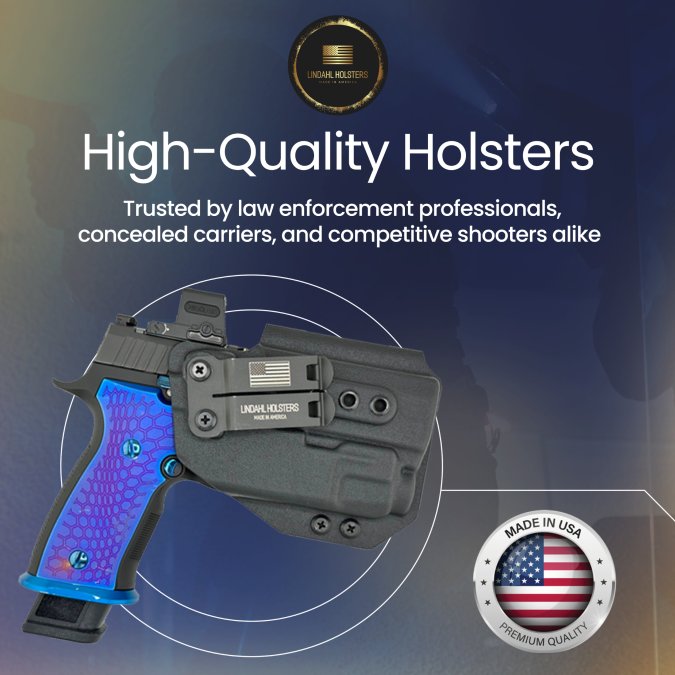
Start with ride height. A high ride keeps the grip above the belt line for a clean draw but exposes more of the gun to printing. A low ride hides the grip but buries it so deep you cannot get a full firing grip. The sweet spot usually leaves two fingers of clearance between the belt and the bottom of the grip.
Cant comes next. A slight forward cant, around 10 to 15 degrees, works well for 4 o'clock carry because it angles the grip toward your hand. Appendix carry typically runs closer to zero cant. Most adjustable holsters, including the P365 model above, let you set cant within a defined range without buying new hardware.
4. Choose the Best Gun Belt for Concealed Carry
The best gun belt for concealed carry is a stiff, purpose-built belt that resists roll and distributes the weight of the firearm. A flimsy dress belt lets the holster sag, which pulls the grip away from your body and creates printing and pressure points at the same time.
ModWing™ Concealment Wing (Claw) Kit →
Belt tension matters as much as belt stiffness. Too loose and the holster rides down and shifts. Too tight and you cut off circulation and create a hard edge against your hip. The goal is a belt that holds the holster in the same spot all day without needing constant adjustment.
This is where hardware upgrades earn their keep. The DCC Monoblock IWB Belt Clip at $5.99 is made from high-strength spring steel with a dual-slot mounting pattern that spreads weight evenly and reduces shifting during the draw. If you want to skip the belt entirely, the Ulticlip UltiTuck IWB Belt Clip at $15.00 attaches directly to clothing and adjusts cant through dual T-slots.


Whichever clip you run, apply a small amount of Blue Threadlocker at $2.99 to the screws. Daily carry vibration backs screws out over time, and a loose clip is a loose holster.
5. Add a Concealment Wing and Wedge to Reduce Printing
A concealment wing and wedge reduce printing by rotating the grip of the gun toward your body. The wing, sometimes called a claw, presses against the inside of the belt and levers the grip inward. The wedge fills the gap between the holster and your body, which tucks the firearm flatter against your torso.

The ModWing Concealment Wing Kit at $9.99 does exactly this. It ships with two interchangeable riser inserts so you can choose a strong or mild rotation based on what you are wearing, and the reversible spine makes it work for right- or left-handed carry. The aggressive texture molded into the insert face keeps the wing from sliding, which keeps the firearm and holster stable.
For long-term comfort, this is also the section where physical conditioning pays off. Core strength and posture change how a holster sits against your body. Carriers who train their core and hips generally find that a wedge does less work because their body supports the holster more naturally.
Preventing Chafing and Skin Irritation During Daily Carry
Chafing and skin irritation come from three things working together: moisture, friction, and pressure from a holster edge or hardware sitting against bare skin. Managing all three is the difference between carrying every day and leaving the holster at home by week two. Most guides list the same five tips and stop there. The useful version explains what each one actually does.
The Mechanism: Why IWB Carry Irritates Skin
Skin under an IWB holster is in a bad environment. It is covered, it is warm, it sweats, and it is being rubbed by a hard surface every time you move. Sweat softens the outer layer of skin and makes it more vulnerable to friction. Friction then creates micro-abrasions. Pressure from a holster edge or a clip concentrates that friction into one spot. Remove any one of the three and irritation usually resolves; remove two and it almost always does.
Short-Term Fixes That Work Today
- Use a full-length sweat guard. A sweat guard keeps the slide and the Kydex edge off your skin. Skipping it to save weight is a mistake, bare Kydex edges against bare skin, combined with moisture and movement, is the fastest route to daily irritation.
- Add a breathable base layer. A thin moisture-wicking undershirt creates a barrier that absorbs sweat and reduces friction. Cotton works but stays wet; a synthetic or merino base layer dries faster and is the more common recommendation for all-day carry.
- Move the clip one mounting hole. If irritation is concentrated in one spot, the fix is usually positional, not a new holster. Shift the clip and re-test for a week before spending money.
- Rotate carry positions. Alternating between appendix and 4 o'clock gives irritated skin time to recover. This is not a permanent solution, but it is an effective way to break an irritation cycle while you diagnose the root cause.
Long-Term Skin Management
Daily carry is a long game, and the carriers who stay comfortable for years tend to treat skin care as part of the routine, not an afterthought.
- Clean and dry the holster. Wipe the inside of the holster after heavy sweat days so salt and residue do not build up against the finish or your skin. A dry microfiber cloth is enough; avoid soaking Kydex or leaving leather damp.
- Inspect hardware monthly. Worn or loose screws change how the holster sits, which creates new pressure points. A Replacement Hardware Kit at $5.99 keeps spare screws and posts on hand so a stripped screw does not sideline your carry setup.
- Watch for edge wear. Over months of use, a Kydex edge can develop a sharp lip where it meets the sweat guard. A few passes with fine sandpaper or an emery board smooths it without changing holster function.
- Give skin recovery time. If a spot is raw, do not carry on it. A day or two of a different position or a different holster lets the skin heal; carrying through raw skin turns a minor irritation into an open wound.
Frequently Asked Questions
What is the most comfortable position for IWB carry?
Comfort depends on your body geometry and daily activities. Appendix carry works well for lean builds and sitting, while 4 o'clock carry distributes weight across the hip for standing and walking. Try both with an adjustable Kydex holster like the Lindahl Holsters Glock 19 IWB Holster ($62.99) that offers two mounting positions for cant and ride height. Most carriers find their ideal spot after testing each position for a full day.
How do I stop my IWB holster from digging into my hip?
A holster that digs usually has the wrong ride height or cant angle. Lower the holster slightly so the muzzle sits below your belt line, and adjust cant so the grip tucks against your body without pressure points. A full sweat guard, like the one on the Lindahl Holsters SIG Sauer P365 IWB Holster, adds a layer between Kydex and skin. Adding a wedge or concealment wing also rotates the grip inward and reduces hot spots.
Does a high-quality Kydex holster improve IWB comfort?
Yes. Custom-molded Kydex holds its shape, so the holster does not collapse or shift during daily movement. Adjustable retention lets you fine-tune how tightly the firearm sits, which reduces pressure on your waistband. A slim profile also minimizes bulk against your body. The Lindahl Holsters Glock 19 IWB Holster ($62.99) includes adjustable retention, adjustable cant, and a protective sweat guard, all of which directly affect how the holster feels after eight or more hours of carry.
How does a proper gun belt affect IWB comfort?
A stiff gun belt keeps the holster from sagging or shifting, which prevents the firearm's weight from concentrating on one spot. Reinforced belts distribute that weight across your hips instead of letting the holster dig in. Belt tension also affects how well a concealment wing works; the wing needs a firm belt to push against. Pairing a stiff belt with a steel clip like the DCC Monoblock IWB Belt Clip ($5.99) keeps the holster locked in place all day.
What is the difference between appendix and 4 o'clock carry for comfort?
Appendix carry places the holster in front of the hip, which keeps the grip accessible while seated and works well for lean builds. It can feel restrictive when bending forward. 4 o'clock carry sits behind the hip, distributing weight more evenly for standing and walking, but the grip can print more when you lean. Your body geometry and daily routine decide which one stays comfortable past the two-hour mark.

