


7 Best Holster Features for First-Time Concealed Carry
Table of Contents
- 1. Secure Trigger Guard Coverage: The Non-Negotiable Feature
- 2. Adjustable Holster Retention: Finding the Right Balance
- 3. Comfortable Concealment: Why the IWB Kydex Holster Design Matters
- 4. Durable Kydex Construction: What to Look For
- 5. Adjustable Cant and Ride Height: Customizing Your Draw
- 6. Reliable Belt Attachment and the Right Concealed Carry Belt
- 7. Optic-Ready Holster Compatibility: Planning for Accessories
- Comparison Table: Key Concealed Carry Holster Features at a Glance
- Frequently Asked Questions
Last Updated: October 8, 2026
1. Secure Trigger Guard Coverage: The Non-Negotiable Feature
Of the 7 best holster features for first time concealed carry, the single most important is full, rigid trigger guard coverage.
Trigger guard coverage is the holster material that fully encloses the trigger and its guard while the firearm is seated. Look for a design that wraps the guard completely and holds its shape under hand pressure.
Safety guidance from the NRA's firearm safety rules treats keeping the trigger area clear as a foundational habit, and a properly molded holster supports that habit rather than fighting it.
At Lindahl Holsters, we mold every IWB Kydex holster so the trigger guard is fully enclosed and the mouth stays open. Proper firearm fitment matters here: a holster molded for the wrong model can leave gaps around the guard even when the overall shape looks right.
How to Evaluate Trigger Guard Coverage
- Confirm the holster is molded for your exact make and model
- Press the holster mouth with your thumb: it should not collapse
- Check that no gap exposes any part of the trigger guard
- Seat the firearm and confirm it clicks into place with no play
Common Beginner Mistakes
The most common mistake is buying a "one size fits many" pouch holster because it is cheap and available. The second is assuming a holster that fits your gun's frame also fits its trigger guard. Generational changes, aftermarket triggers, and weapon-mounted lights all change the geometry, if you carry with a light, the holster must be molded for that exact light or the guard coverage will not line up.
2. Adjustable Holster Retention: Finding the Right Balance
Adjustable holster retention lets you tune how firmly the holster grips your firearm, the feature that separates a holster you will actually carry from one that sits in a drawer. Too loose and the gun shifts or falls out; too tight and you fight the draw when it counts.
Holster retention is the friction or mechanical hold that keeps the firearm seated until you deliberately draw it. In a quality IWB Kydex holster, retention comes from the molded shell gripping the frame and trigger guard area, tuned with screws that adjust pressure against the gun.
How Tight Should Retention Be?
The practical test most instructors use: hold the holster upside down with the firearm seated and shake gently, the gun should stay put. Then draw at your normal speed; it should release cleanly without yanking or wiggling. If either test fails, adjust the retention screws a quarter turn at a time and retest.
A common mistake is over-tightening retention "for safety" and then avoiding practice because the draw feels like work. Retention is a balance, not a maximum, adjust it to your carry position, activity level, and draw stroke, then recheck after a few weeks. Screws can back out over time, so we recommend a small amount of blue medium-strength threadlocker on retention hardware.
3. Comfortable Concealment: Why the IWB Kydex Holster Design Matters
Comfort is one of the 7 best holster features for first time concealed carry, because it decides whether you carry every day or leave the holster at home.
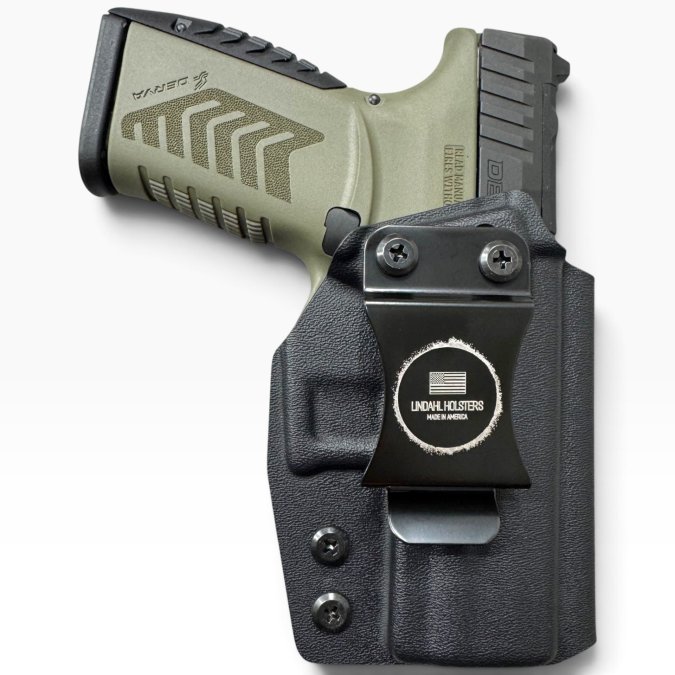
The design choices that drive comfort are predictable. A sweat guard keeps the slide off your skin in warm weather. A slim profile reduces bulk against your hip or abdomen. A well-placed clip spreads the weight so the holster does not dig in at one point.
Evaluating Comfort Before You Buy
- Check whether the holster has a sweat guard that covers the slide
- Look at the overall profile: thinner is easier to conceal and more comfortable
- Confirm the clip position matches where you plan to carry
- Read the manufacturer's stated carry positions and pick a holster built for yours
A common mistake is choosing a holster based on looks alone and ignoring carry position. Appendix carry and strong-side hip carry put pressure on completely different parts of the body. A holster designed for one will not feel right in the other, no matter how good the materials are.
4. Durable Kydex Construction: What to Look For
Durable Kydex construction keeps a holster's shape, retention, and trigger coverage intact after months of daily carry. Kydex is a thermoplastic that holds a molded shape, resists moisture, and does not absorb sweat the way leather or fabric can.
When you evaluate construction, look at molding quality. A holster molded on a dedicated form for your specific model has crisp lines and consistent retention; a loosely molded one has soft edges and inconsistent grip.
A common mistake is judging durability by feel alone, a thick holster is not automatically a durable one. What matters is whether the material holds its molded shape and whether the hardware stays tight. Inspect periodically and replace worn hardware before it becomes a problem; we keep replacement hardware kits and clips available so a holster can be maintained rather than replaced.
ModWing™ Concealment Wing (Claw) Kit →
5. Adjustable Cant and Ride Height: Customizing Your Draw
Adjustable cant and ride height let you angle the holster and set how high or low it sits on your belt, changing how quickly and smoothly you can draw. Cant is the tilt; ride height is the vertical position relative to the belt.

These adjustments solve practical problems. A slight forward cant puts the grip where your hand naturally falls, speeding up the draw for hip carry. A deeper ride height hides the grip better under a shirt; a higher one gives you more to grab.
A common mistake is setting the cant once and never revisiting it. Your carry position, wardrobe, and even the season change what works. Look for a design with at least two mounting positions for the clip, and adjust in small steps.
6. Reliable Belt Attachment and the Right Concealed Carry Belt
A reliable belt attachment keeps the holster anchored so it does not shift, lift, or come off during a draw. This works together with your concealed carry belt, beginners often upgrade the holster while ignoring the belt that holds it.
A concealed carry belt is stiff enough to support the weight of a holster and firearm without sagging or rolling. A flimsy dress belt lets the holster pull away from your body, hurting concealment and draw consistency. The clip is the other half of the system: a weak clip lets the holster lift off the belt during the draw, which is both a safety issue and a training problem.

Clip Options for First-Time Carriers
- Standard IWB clips are simple, durable, and easy to replace when they wear
- Steel clips hold shape better than polymer and resist bending over time
- Tuckable clips let you tuck a shirt over the holster for deeper concealment
- Adjustable clips let you fine-tune cant and mounting spacing
Match the clip to how you dress. If you tuck your shirt, a tuckable option makes carry possible; if you wear an untucked shirt, a standard clip is simpler and just as secure. Whichever you choose, verify the clip holds firmly on your belt and check the hardware periodically.
7. Optic-Ready Holster Compatibility: Planning for Accessories
Optic-ready holster compatibility means the holster is molded to clear a slide-mounted optic and, where applicable, a weapon-mounted light. If you plan to add either, buy for it now rather than replacing the holster later.
The geometry matters here. An optic sits above the slide, so a holster molded for a plain slide can press against it and prevent the firearm from seating fully. A frame-mounted light changes the width and shape of the front of the gun, so the holster must be molded around that light.
When you order, select the optic and light configuration so the holster is molded for your exact setup. A common mistake is buying for the bare gun and then adding an optic, only to find the firearm will not seat. Plan your accessories first, then order the holster to match.
Comparison Table: Key Concealed Carry Holster Features at a Glance
| Feature | Why It Matters | How to Evaluate | Common Mistake |
|---|---|---|---|
| Trigger guard coverage | Prevents objects reaching the trigger | Press the mouth; it should not collapse | Buying a soft, one-size pouch |
| Adjustable retention | Keeps the gun secure without a hard draw | Shake test, then draw test | Over-tightening for "safety" |
| Concealment comfort | Determines whether you carry daily | Check sweat guard, profile, clip position | Ignoring carry position |
| Kydex construction | Holds shape, retention, and coverage | Check molding quality and hardware | Judging durability by thickness |
| Adjustable cant and ride height | Speeds up the draw and hides the grip | Look for two or more mounting positions | Setting cant once and never revisiting |
| Belt attachment and belt | Keeps the holster anchored on the draw | Confirm firm belt hold; use a stiff belt | Upgrading the holster, not the belt |
| Optic-ready compatibility | Lets the firearm seat with accessories | Order for your exact optic and light | Buying for the bare gun first |
Frequently Asked Questions
What should I look for in my first concealed carry holster?
Prioritize full trigger guard coverage, adjustable retention, and a design that fits your specific firearm model. Look for an IWB Kydex holster with adjustable cant and ride height so you can tune the draw angle to your body. A reliable belt attachment keeps the holster stable during movement. If you plan to add a red dot later, choose an optic-ready holster now to avoid buying twice. Lindahl Holsters offers USA-made Kydex holsters with adjustable retention, adjustable cant, and optic-ready designs backed by a lifetime warranty.

How tight should holster retention be?
Retention should hold the firearm securely during normal movement, including running or bending, but still allow a smooth, deliberate draw. Test by turning the holster upside down with the firearm unloaded. The gun should stay in place with a light shake but release with a firm pull. Adjustable retention lets you fine-tune this tension over time. Too tight slows your draw; too loose risks the firearm shifting or falling. Check retention regularly, especially after changing hardware or adding accessories.
Can I use a holster with a red dot sight?
Yes, but you need an optic-ready holster designed with clearance for the sight. Standard holsters may pinch or block the optic, causing fitment issues or damage. When ordering, select the optic-cut option for your specific firearm model. Lindahl Holsters offers optic-ready designs for models like the Glock 19, Glock 19X, and Springfield Hellcat Pro. Confirm compatibility before purchase, and always verify proper fitment and retention after mounting your optic.
Do I need a special belt for concealed carry?
A sturdy concealed carry belt makes a significant difference in comfort and stability. Belts designed for carry are stiffer and resist rolling or sagging under the weight of a loaded firearm. A flimsy dress belt may cause the holster to shift, print more, or become uncomfortable over time. Look for a belt that matches your holster clip width, typically 1.5 inches. Pairing a quality belt with a reliable clip, such as the DCC Monoblock or Ulticlip UltiTuck, keeps your setup secure throughout the day.
How do I safely test a new holster?
Start with the firearm unloaded and all ammunition stored separately. Insert the firearm into the holster and check that it seats fully with no interference. Adjust retention until the gun stays put during a gentle shake but draws smoothly. Wear the holster around the house to check comfort and concealment before carrying in public. Verify the trigger guard is fully covered and the holster does not shift during movement. Recheck retention after any hardware changes, and follow all local laws for carrying concealed.

