


Buy Level 2 Duty Holster: Selection Guide for 2026
Table of Contents
- What Level 2 Retention Actually Means
- Level 2 vs. Level 3 Holster: When Each One Makes Sense
- Duty Holster Retention and Draw: Speed vs. Security
- Finding a Duty Holster for Specific Pistol Models
- Level 2 Holster with Optic Cut: Accommodating Modern Setups
- Holster Materials, Fit, and Firearm Protection
- Mounting Options and Belt Compatibility
- Common Mistakes When Choosing a Level 2 Duty Holster
- Maintenance and Long-Term Performance
- Frequently Asked Questions
Last Updated: October 17, 2026
What Level 2 Retention Actually Means
A level 2 duty holster uses a two-point retention system. The first point is passive, the holster's fit around the gun. The second is active, typically a rotating hood or thumb-break that requires deliberate disengagement before drawing. This dual-layer approach balances quick access with genuine security, making it the standard for law enforcement and professional duty use.
Level 2 retention prevents casual disarming. Someone can't simply grab your holstered pistol and pull it free; they must understand the specific mechanism and execute the correct motion. For patrol officers, tactical professionals, and security personnel in high-stress environments, that extra barrier can be the difference between control and loss of the weapon.
Most level 2 systems use either a rotating hood that locks over the slide or a thumb-break strap across the rear of the slide. Both require releasing the retention lock before your hand can clear the gun. The draw becomes: disengage retention, clear the holster, present the firearm. It's muscle-memory training, and it works.
Level 2 vs. Level 3 Holster: When Each One Makes Sense
Level 2 and level 3 holsters both use active retention, but level 3 adds a third security point, often a hood release button or additional thumb-break. This creates a three-step draw: release lock one, release lock two, clear the holster.
Level 3 is overkill for most duty situations. It's designed for high-risk environments with sustained grappling or multiple close threats, corrections, riot control, specialized tactical units. The added security costs you: slower draw, more complexity under stress, and a higher chance of fumbling the sequence when adrenaline is high.
Level 2 is the practical sweet spot for patrol officers and first responders. It provides genuine weapon retention without sacrificing draw speed or adding unnecessary complexity. You've trained the motion hundreds of times, the retention disengages smoothly, and you can access your firearm in under a second when it matters.
The choice comes down to your threat environment. If you're working a patrol beat or doing security work, level 2 duty holster systems give you the protection you need without the training burden of a third lock. If you're in a corrections facility or working a high-risk detail where you expect close-quarters confrontation, level 3 makes sense despite the draw penalty.
Duty Holster Retention and Draw: Speed vs. Security
The fundamental tension in duty holster design: retention slows your draw, and speed costs you security. The goal is the balance that matches your actual risk profile.
A level 1 retention holster, just a passive fit, lets you draw fastest, no lock to defeat, no hood to rotate, no strap to release. But anyone within arm's reach can also grab your gun and pull it free. That's acceptable for some civilian carry situations and unacceptable for duty use.
A level 2 duty holster adds one active retention point. The draw becomes slightly slower, you must disengage retention before your hand fully clears the holster, but the penalty is minimal with regular training. Most officers draw from a level 2 holster in 1.2 to 1.5 seconds, and the weapon stays secure against casual disarming attempts.
Level 3 and beyond add more security but compound the draw penalty. Each additional lock adds a discrete step. Under high stress, with adrenaline flooding your system, that extra step can become a fumble. The faster your draw needs to be, the lower your retention level should be.
Real-world draw performance depends on three variables: the retention mechanism, your training frequency, and your firearm's ergonomics. A well-designed level 2 system with a smooth hood beats a poorly-designed level 3 every time. The best duty holster is one you've trained with until retention disengagement becomes automatic.
Finding a Duty Holster for Specific Pistol Models
Fit is the single biggest reason a level 2 duty holster fails in service. A holster that's close but not exact will either refuse to let the retention hood close or let the pistol shift enough that the active lock never fully seats. Treat holster selection as a compatibility problem, not a brand problem: build a configuration sheet before you shop, then match it line by line against the maker's mold list.
Build your configuration sheet first
Write down every variable that changes the holster's geometry:
- Pistol model and generation. A Glock 17 and a Glock 19 share a manual of arms but differ in slide and grip length; a holster molded for one will not properly retain the other. Generation matters too, because slide serrations, optic cuts, and accessory rails changed across generations of many common duty pistols.
- Slide length and profile. Full-size, compact, and subcompact variants of the same family often need separate molds. A holster cut for a full-size slide will leave a compact pistol sitting too deep or too shallow.
- Weapon light, exact model. A Streamlight TLR-1 and a TLR-7A require different molding because the light bodies and bezel diameters differ. A holster molded for a light-bearing pistol generally will not retain the same pistol without the light, and vice versa.
- Optic and mounting plate. A slide-mounted red dot changes the top profile. The holster needs an optic cut sized to that footprint, and the mounting plate height can matter as much as the optic itself.
- Aftermarket sights, compensators, and threaded barrels. Tall sights, compensators, and extended barrels all change the outer envelope and can bind on a standard mold.
- Rail-mounted accessories. Lasers and combination light/laser units change the dust-cover profile and must be specified at order time.
Match the sheet to the maker's mold list
Quality makers publish a compatibility list keyed to pistol model, light model, and optic footprint. Read it literally, and if your exact combination isn't listed, ask before ordering. Most makers support the popular duty combinations, a full-size striker-fired pistol with a TLR-1 or X300, or a compact with a TLR-7A, and treat everything else as a custom order. Custom molding is the right answer for unusual setups, because the holster is built around your actual gun rather than a nearest-fit approximation.
Quick compatibility matrix to work from
Use this as a starting framework, then confirm against the specific maker's list:
Configuration |
What the holster must account for |
Common fit failure |
|---|---|---|
Full-size pistol, no light, no optic |
Slide and grip length, standard dust cover |
Holster molded for compact leaves pistol too deep |
Full-size pistol with TLR-1 or X300 |
Light body and bezel diameter |
Standard (non-light) mold will not seat the light |
Compact pistol with TLR-7A |
Shorter dust cover, smaller light body |
Full-size light mold leaves the pistol loose |
Pistol with slide-mounted red dot |
Optic footprint and plate height |
Standard mold binds on the optic housing |
Pistol with compensator or threaded barrel |
Extended muzzle envelope |
Standard mold blocks full seating |
Pistol with rail-mounted laser |
Dust-cover accessory profile |
Light-only mold will not clear the laser body |
Test the fit before you commit
When the holster arrives, do a deliberate fit check before carrying it on duty. Insert the pistol and listen for a positive click as the passive fit seats. Close the active retention and confirm it locks without force, then try to lift the pistol with retention engaged, it should not move. Draw slowly and confirm the release is smooth and the pistol clears without binding on the optic, light, or sights. If any step requires force, the mold is wrong for your configuration; contact the maker rather than "break in" a holster that will never retain correctly.
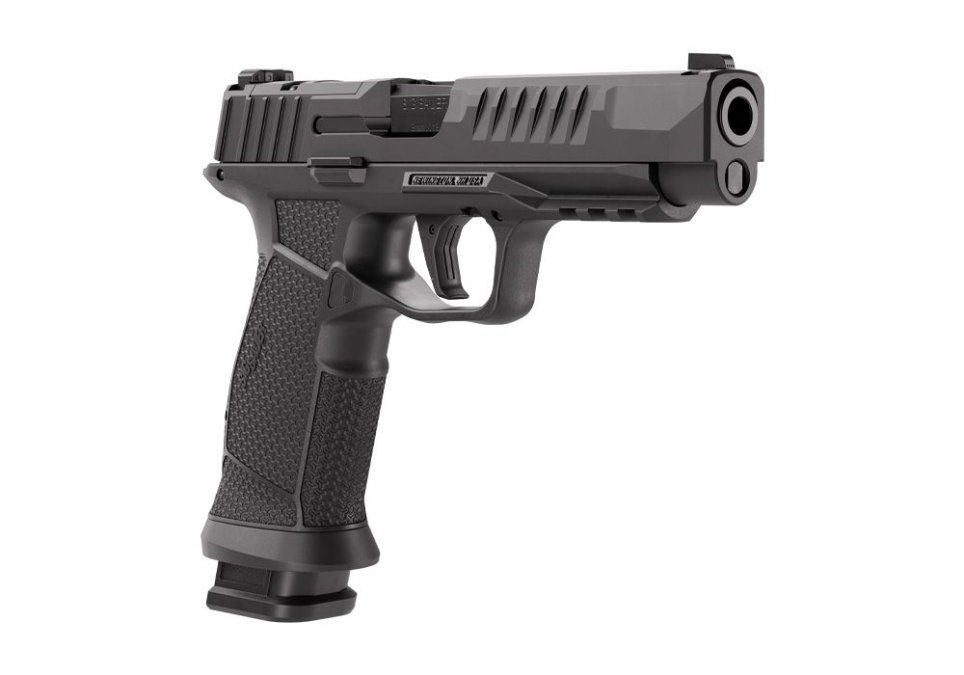
Level 2 Holster with Optic Cut: Accommodating Modern Setups
A slide-mounted red dot sits directly in the path of a rotating hood or thumb-break, so an optic-cut level 2 holster is a functional requirement, not a cosmetic option. The cut must clear the optic's housing through the full draw stroke while still letting the active retention seat fully. Get the geometry wrong and you get one of two failures: the hood won't close over the optic, or the optic snags on the holster edge and drags the pistol out of alignment during the draw.
What the optic cut actually changes
An optic cut is a molded relief in the holster body sized to the optic's footprint and height. It does three things:
- Clears the housing. The relief lets the optic pass without contacting the holster during insertion and draw.
- Preserves retention geometry. The pistol sits at the correct depth, so the passive fit and active hood engage as they would on a non-optic mold.
- Protects the optic. A properly sized cut keeps the sight body from bearing load against the holster, which matters for zero retention and mounting screws.
Common footprints and what to specify
Optic cuts are usually keyed to a footprint rather than a brand. Common duty footprints include the Trijicon RMR pattern, the Holosun 407/507 pattern, and the Leupold DeltaPoint Pro pattern, with several other sights sharing or adapting to those footprints through mounting plates. When you order, specify the pistol model, the exact optic, and the mounting plate if you use one. Plate height changes how high the optic sits and therefore how much relief the holster needs.
Optic footprint |
Typical duty use |
What to confirm at order |
|---|---|---|
RMR pattern |
Compact and full-size duty pistols |
Optic model and plate height |
Holosun 407/507 pattern |
Full-size and compact duty pistols |
Whether the cut clears the rear housing |
DeltaPoint Pro pattern |
Full-size duty pistols |
Optic height above the slide |
Enclosed-emitter optics |
Duty and harsh-environment use |
Extra relief for the enclosed housing |
Trade-offs you should accept going in
An optic-cut holster locks you to that optic footprint. Swap to a different red dot, especially one with a taller housing or different footprint, and the holster may no longer clear it; the same applies if you add or remove a mounting plate. Treat the optic as part of your final duty configuration, like the weapon light, and finalize it before you order. The payoff: a modern sighting system without giving up the retention security of a properly fitted level 2 system.
Fit check for optic-cut holsters
After the holster arrives, insert the pistol slowly and watch the optic pass the holster edge, it should clear without contact. Close the active retention and confirm it seats fully with the optic installed, then draw several times and check that the optic doesn't catch on the way out. If the optic drags or the hood won't close, the cut is wrong for your setup; contact the maker rather than modifying the holster yourself, since sanding an optic cut can compromise both retention and the sight's protection.
Holster Materials, Fit, and Firearm Protection
Most modern duty holsters are made from Kydex, a thermoplastic molded to fit your specific firearm. It's durable, weather-resistant, and holds its shape over years of use, but it's harder than leather and can scratch your finish if the molding isn't precise.
OWB Nicotine Pouch Holster | Lindahl Holsters →
Molding quality determines whether your holster protects your gun or damages it. A well-molded Kydex holster has smooth interior surfaces and is precisely shaped to your firearm's dimensions, so there's no movement or rubbing during draw. A poorly-molded holster leaves sharp edges or rough spots that gradually wear your finish.
Lindahl Holsters uses custom Kydex molding for each firearm model. The molding process creates a holster that fits your specific pistol without excess material or sharp edges. This ensures that your firearm stays protected and your retention system works reliably.
Fit also affects how the holster functions on your belt. A loose fit lets the holster shift or rotate during the draw; a tight fit makes extraction harder. The correct fit is snug without being forced, the pistol sits securely and stays in place when you move, but the draw is smooth and predictable.
Mounting Options and Belt Compatibility
How you mount your holster to your belt affects comfort, retention, and draw accessibility. Most duty holsters use either a belt loop or a paddle attachment. Each has trade-offs.
Belt-loop holsters thread directly through your duty belt. They're secure and won't shift, though they require removing your belt to take the holster off. This is standard for duty carry because the holster stays exactly where you put it.
Paddle holsters clip onto the outside of your belt without threading. They're faster to put on and take off, but can shift if your belt rides up or you move aggressively. For duty use where the holster stays in place all shift, belt loops are more reliable.
Your duty belt's width and material matter too. Most holsters are designed for 1.75-inch or 2-inch belts. A thinner civilian belt won't support the weight and stress of a loaded duty holster. A proper duty belt is reinforced, usually with a inner and outer layer, to distribute the weight of the holster, magazines, and other gear. Investing in high-quality load-bearing equipment ensures that your setup remains stable throughout a shift, much like the durability found in authentic military gear designed for rigorous field conditions.
Lindahl Holsters offers both belt-loop and paddle mounting options. The choice depends on your preference and your duty belt setup. Both options are designed to keep your holster stable and your firearm accessible.
Common Mistakes When Choosing a Level 2 Duty Holster
The most common mistake is buying a holster before finalizing your firearm configuration. You order for your Glock 19, then decide to add a weapon light, now the holster doesn't fit, you've wasted money, and you're back to square one.
Another mistake is prioritizing aesthetics over function. A holster that looks tactical in a catalog might not work with your actual draw style or belt setup. The best duty holster works reliably every time, not the one that looks most impressive.
Underestimating fit is another common error. A loose holster that "fits well enough" will fail you: retention won't engage properly, your draw will be inconsistent, and your firearm won't be secure. Spend the time to get the fit right.
Many officers also choose retention levels that don't match their actual threat environment. You don't need level 3 retention if you work a low-crime patrol beat. You do need it if you're in corrections or working a high-risk detail. Match your retention to your job.
Finally, don't skip the training period. A new holster changes your draw motion slightly, so train regularly until the new retention disengagement becomes automatic. Skipping it means slower draws and potential fumbles when it matters.
Maintenance and Long-Term Performance
A quality Kydex holster requires minimal maintenance. It doesn't absorb moisture like leather and won't dry out or crack over time, so regular inspection matters more than active maintenance.
Check your holster monthly for wear. Does the retention mechanism engage smoothly and release cleanly? Are sharp edges or rough spots developing on the interior? Are there new scratches or wear marks on your firearm's finish where it contacts the holster?
Address rough spots or sharp edges immediately, light sanding with fine-grit sandpaper smooths minor imperfections. If the retention mechanism becomes sluggish or doesn't engage fully, contact the manufacturer; most quality makers offer warranty service or repair.
Clean your holster occasionally, especially in dusty or sandy environments. A damp cloth and mild soap suffice; dry it thoroughly before carrying again, and avoid harsh solvents or abrasive cleaners that damage the Kydex finish.
A quality Kydex holster will provide years of reliable service. Lifespan depends on your use, maintenance habits, and the quality of the original molding.
Choosing the right duty holster means matching your specific firearm configuration to a holster system that provides genuine retention without sacrificing draw speed or comfort. A level 2 duty holster offers the practical balance most law enforcement and security professionals need. The key is getting the fit right, training regularly with your new system, and maintaining your holster throughout its service life. At Lindahl Holsters, we build custom Kydex holsters molded to your exact firearm specifications, with 1-3 business day lead times and a 15% discount for military, law enforcement, and first responders. Find your gun model and get started with a holster built for your actual duty setup.
Frequently Asked Questions
What does Level 2 retention mean on a duty holster?
Level 2 retention uses two independent mechanisms to secure the firearm: typically a thumb break and a rotating hood or locking system. This prevents accidental draws while allowing authorized access under stress. Law enforcement and military personnel rely on Level 2 retention for patrol duty, active-duty environments, and high-contact scenarios where weapon retention is critical. The dual-lock design sits between Level I (friction-only) and Level III (three-point retention), making it the standard for duty-rated holsters.
Will a Level 2 duty holster fit my Glock 19 with a weapon light?
Not all Level 2 holsters accommodate weapon lights. You need a light-bearing or optic-cut model specifically molded for your firearm and accessory combination. Many duty holsters come in both light-bearing and non-light-bearing versions. Before purchasing, confirm the holster is designed for your exact pistol model and light type (TLR-7A, TLR-1, Streamlight, etc.). Custom-molded holsters ensure proper fit and retention without gaps or movement.
Should I choose a Level 2 or Level 3 holster for duty use?
Level 2 holsters are the standard for patrol and duty officers because they balance retention security with rapid draw access. Level III retention adds a third locking mechanism, making draws slower and more complex—typically reserved for specialized tactical roles or high-risk environments. Most law enforcement agencies and first responders choose Level 2 for daily patrol because it provides adequate security without sacrificing draw speed under pressure. Your department's policy and your specific role determine which level is appropriate.
How do I know if a Level 2 duty holster will actually fit my firearm?
Verify the holster is molded for your exact pistol model and any mounted accessories (lights, optics, lasers). Custom Kydex holsters are precision-molded to specific firearm dimensions. Before ordering, check the manufacturer's compatibility list and confirm your firearm variant (compact, full-size, etc.). If your pistol has a mounted light or optic, ensure the holster is designed for that specific setup. Many retailers offer return policies if fit is incorrect, but confirming compatibility before purchase prevents wasted time and expense.

