


9 Key Differences Between IWB and OWB Holsters
Last Updated: October 31, 2026
Quick Summary
Choosing between IWB and OWB holsters comes down to carry position: IWB tucks the gun between your body and pants for better concealment, while OWB rides outside the waistband for more comfort and a faster draw. Pick IWB if concealment comes first, and OWB if comfort and speed come first.
- IWB holsters hide under untucked shirts and light cover garments with minimal printing.
- OWB holsters need a longer cover garment and print more readily than IWB setups.
- A slight forward cant and mid ride height are easiest for most carriers to draw from consistently.
- Check retention by turning the loaded, holstered gun upside down over a soft surface.
- Lindahl Holsters have a 1-3 business day lead time and offer first responders a 15% discount.
Table of Contents
- How IWB and OWB Holsters Differ in Carry Position
- IWB Holster Pros and Cons for Everyday Carry
- OWB Holster Pros and Cons for Range and Duty Use
- Holster Fit for Firearm Model: Why Precision Matters
- Holster Cant and Ride Height: Tuning Your Draw
- Concealment, Printing, and Wardrobe Compatibility
- Belt, Clothing, and Equipment Requirements
- Safety, Retention, and Safe Holster Fit
- Training and Draw Performance: Testing Your Setup
- Find Your Gun Model and Build Your Carry Setup
- Frequently Asked Questions
How IWB and OWB Holsters Differ in Carry Position
Choosing between IWB and OWB holsters starts with one question: where does the gun sit relative to your waistband? An inside-the-waistband holster tucks the firearm between your body and your pants. An outside-the-waistband holster rides on your hip, outside the waistband, held by a belt loop or paddle. That single difference in carry position drives everything else: concealment, comfort, draw speed, and what you can wear. This guide from Lindahl Holsters breaks down the trade-offs so you can pick a setup that fits your body, your wardrobe, and your daily routine instead of guessing.
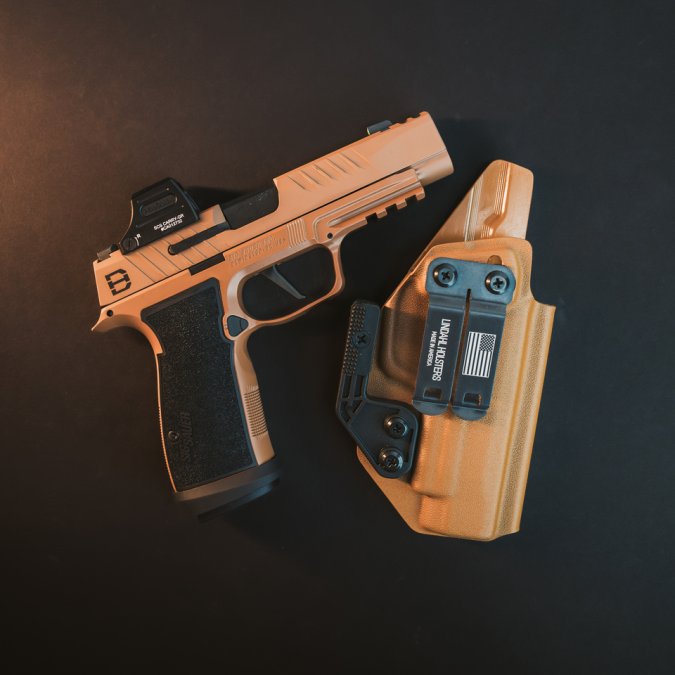
The position also changes your draw. An IWB holster requires clearing your cover garment and pulling the gun from against your body. An OWB holster sits more exposed, so the draw path is shorter and cleaner. Neither is universally better. The right call depends on whether concealment or access matters more for how you actually live.
The core trade-offs between the two carry positions come down to a few practical differences.
| Factor | IWB | OWB |
|---|---|---|
| Carry position | Between body and pants | Outside waistband, on hip |
| Concealment | Better concealment, minimal printing | Harder to conceal, prints more readily |
| Comfort | Less comfortable during long sits | More comfortable for long wear |
| Draw | Extra beat to clear clothing | Shorter, more direct draw path |
| Wardrobe | Works with untucked shirts and light cover garments | Needs a longer cover garment |
| On and off | Slower to put on and take off | Easier on and off |
| Best for | Daily concealed carry | Range, training, open carry where permitted |
IWB Holster Pros and Cons for Everyday Carry
The core advantage of an IWB holster is concealment. Tucking the gun inside the waistband hides the grip and slide behind your belt line, which makes printing far less likely under a shirt. The trade-off is comfort. Kydex pressed against your hip all day takes some getting used to, and sitting, bending, and driving can all shift how the holster feels.
- Pros: Better concealment, minimal printing, works with untucked shirts and light cover garments, keeps the gun close to the body
- Cons: Less comfortable during long sits, requires a sturdy belt, can limit wardrobe options, slower to put on and take off
Where IWB Wins: Concealment and Printing
Concealment is where IWB holsters earn their keep. Because the firearm sits inside the waistband, the grip stays tight to your torso and hides under a normal shirt. For daily concealed carry, that matters more than almost anything else. A slim Kydex profile helps here, and a holster with adjustable cant lets you angle the grip to sit flatter against your body. If printing is your main worry, IWB is the answer. A molded shell can keep the gun locked in one position so it doesn't shift and print.
Where IWB Falls Short: Comfort and Access
Comfort is the honest weak point. Pressed against the hip for hours, an IWB holster can dig in during long drives or desk work, and the draw takes an extra beat because you clear clothing first. A common mistake is buying a holster with no cant adjustment and fighting it all day. If comfort is your sticking point, adjusting cant and ride height often makes the biggest difference.
OWB Holster Pros and Cons for Range and Duty Use
OWB holsters trade a little stealth for comfort and speed. With the gun riding outside the waistband, there's nothing pressing into your hip, and the draw is more direct. That's why OWB setups dominate range sessions, training classes, and duty-style carry. The catch is concealment: an OWB rig needs a longer cover garment to stay hidden, and it prints more readily than an IWB setup.
- Pros: More comfortable for long wear, faster and cleaner draw, easier on and off, well suited to range and open carry where permitted
- Cons: Harder to conceal, requires a longer cover garment, more visible when bending or reaching
Where OWB Wins: Comfort and Draw Speed
Comfort and access speed are the OWB holster's strengths, but the reasons are mechanical, not just preferential. Because the shell sits outside the waistband, the gun doesn't press into the hip or thigh during long sits, and there's no fabric bunched between the grip and your hand. A paddle design locks onto the waistband and can be put on and taken off quickly. With the gun outside the waistband, the draw path is typically shorter and more direct.
That consistency matters most in scenarios where you're moving, kneeling, or transitioning between positions. On the range, an OWB rig lets you practice reloads and malfunction drills without fighting a cover garment. For duty-style carry, the exposed position makes it easier for a partner or instructor to verify that the holster is clear and the gun is fully seated. If you're leaning toward OWB for comfort and speed, an OWB paddle holster is a practical starting point. Best for: range use, training, and open carry where permitted. Skip if: you need deep concealment under a t-shirt.

Where OWB Falls Short: Concealment and Clothing
Concealment is the OWB holster's weak spot. The gun sits outside the waistband, so it is more visible under light clothing and typically needs a jacket, vest, or longer shirt to stay covered. In warm weather, that's a real constraint. A common pattern is that carriers who switch to OWB for summer comfort discover the cover garment becomes the new problem: a loose untucked shirt can ride up when you reach overhead, and a light jacket gets removed as the day warms up.
Watch out for movement-specific exposure. Bending at the waist, reaching for a top shelf, or lifting a child can expose the grip or the bottom of the holster. Before you commit to an OWB setup for daily concealed carry, do a mirror check in the clothing you actually wear: raise both arms, bend forward, and sit down. If the grip or shell becomes visible in any of those positions, you need a longer cover garment or a different carry position. Also check that your belt and holster combination keeps the rig from shifting when you move; a paddle that rotates on the waistband will print differently from one that stays put.
Holster Fit for Firearm Model: Why Precision Matters
Holster fit for firearm model matters for consistent carry. A holster molded for your specific pistol is designed to hold the gun securely and keep it from shifting, while a loose fit can allow the firearm to move during carry. For a deeper look at why custom Kydex fit matters, see Benefits of Custom Kydex Holsters: Why Fit Matters. When you order, match the holster to your firearm's generation, optic, and light setup so the fit is right the first time.
Holster Cant and Ride Height: Tuning Your Draw
Holster cant and ride height are the two adjustments that decide how your draw feels. Cant is the angle of the holster, and ride height is how high or low the gun sits on your belt. A forward cant tilts the grip toward your hand for a faster draw, while a straight drop suits cross-draw or behind-the-hip carry. Ride height changes how much of the grip clears your belt line. Most carriers find a slight forward cant and a mid ride height the easiest to draw from consistently. Adjust both before you judge a holster.
Concealment, Printing, and Wardrobe Compatibility
Printing is the visible outline of a concealed firearm through clothing, and wardrobe compatibility is how well your holster hides under what you actually wear. IWB setups hide under untucked shirts, light jackets, and looser tops. OWB setups need a longer cover garment to stay concealed. Your body type and climate both matter: a heavier cover garment hides more but gets uncomfortable in heat. Match the holster to your daily clothing rather than changing your whole wardrobe around one holster.
Belt, Clothing, and Equipment Requirements
A sturdy belt is the foundation of any carry setup. A flimsy belt sags under the weight of a gun and holster, which hurts both concealment and draw consistency. Look for a belt rated for carry use, sized to your holster's clip or paddle. Clothing matters too: waistbands need to support the holster, and cover garments need enough length to stay down when you move. Watch out: a weak belt quietly undoes a good holster.
Safety, Retention, and Safe Holster Fit
Retention is how firmly the holster holds the gun, and it's a safety feature, not a convenience. A holster with adjustable retention lets you tune the hold so the firearm stays put during movement but still draws cleanly. Full trigger coverage is non-negotiable: the shell should cover the trigger guard completely so nothing can reach the trigger while holstered. Check retention by turning the loaded, holstered gun upside down over a soft surface and confirming it doesn't fall out. Safe holster fit means the gun seats fully with an audible click every time.
Training and Draw Performance: Testing Your Setup
A holster only proves itself under live practice, and the goal isn't to declare one carry position universally faster. The goal is to measure your own performance consistently so you can compare setups on equal terms. Most practitioners find that draw times vary more by clothing, body type, and practice routine than by IWB versus OWB alone.
Build a Safe, Repeatable Test
Start with an empty firearm and verify it's clear before every dry-fire session. Use a dedicated backstop or a direction with no people or fragile items, and remove live ammunition from the room. A common pattern is to run dry reps until the motion is smooth, then confirm the same motion at the range with live fire under an instructor's supervision if you're new to drawing from a holster.
Measure these variables one at a time so you know what changed:
- Cover garment: same shirt or jacket for every rep.
- Starting position: hands at sides or hands at chest, but keep it identical.
- Target: a consistent aiming point at a safe distance.
- Par time: use a shot timer or a phone app with a par function to record the time from start signal to a confirmed sight picture.
- Reps: at least 10-15 reps per setup before you compare averages.
Compare IWB and OWB Fairly
Run the same drill with each holster and record the average and the slowest rep, not just the best one. The slowest rep tells you where the snag is: clothing catching the grip, a cant that forces your wrist to twist, or retention that's too tight. If your IWB draw is consistently slower only when you wear a particular cover garment, the holster may be fine and the clothing may be the variable. If your OWB draw is faster on the range but you can't reproduce it under a cover garment, you've found the real trade-off for your routine.
Practice Beyond the First Shot
Draw speed is only one part of performance. Add reloads, movement to cover, and reholstering to your practice. Safe reholstering matters as much as a fast draw: look the gun into the holster, keep your finger off the trigger, and confirm the shell fully covers the trigger guard before you relax. A common mistake is judging a holster after one session. Give a new setup several range trips before you decide, and adjust cant and retention between sessions to find what's fastest and most consistent for you.
Find Your Gun Model and Build Your Carry Setup
The right holster is the one that matches your carry priority. If concealment comes first, go IWB. If comfort and speed come first, go OWB. At Lindahl Holsters, we build custom Kydex holsters molded to your specific firearm, with adjustable retention and cant so you can tune the fit to your body and draw. Lindahl Holsters are handcrafted in the USA with a 1-3 business day lead time, and military, law enforcement, and first responders receive a 15% discount. Ready to settle the IWB-versus-OWB question for your own gun? A Glock 19 IWB holster is a solid place to start building your daily carry setup.

Frequently Asked Questions
What is the difference between IWB and OWB holsters?
An IWB (inside-the-waistband) holster sits between your body and your pants, with only the belt clips visible. An OWB (outside-the-waistband) holster mounts on the outside of your belt, so the firearm rides against your hip. IWB prioritizes concealment and a low profile, while OWB prioritizes comfort, quicker access, and less clothing interference. The right choice depends on whether your daily priority is hiding the firearm or drawing it fast and comfortably.
Is an IWB or OWB holster better for concealed carry?
For strict concealment, IWB usually wins because the firearm sits inside the waistband and the body naturally breaks up its outline. A slim Kydex IWB holster like the Lindahl Glock 19 IWB Holster ($62.99) is built to reduce printing under a t-shirt. OWB can work for concealed carry too, but it requires a longer cover garment such as an untucked button-down or jacket. If your wardrobe is mostly fitted or tucked shirts, IWB is the more reliable path.
How should a holster fit my firearm?
A properly fitted holster is molded to your exact firearm model, so the gun seats with a positive click and no side-to-side play. Retention should hold the firearm during a shake test but release cleanly on a deliberate draw. Full trigger coverage is non-negotiable. Custom Kydex holsters, like those molded for the Glock 19, Glock 17, or 1911, deliver this precision fit better than generic nylon pouches, which can stretch and lose retention over time.
Can an OWB holster be concealed?
Yes, with the right clothing. An OWB holster sits close to the body when paired with a stiff belt and a holster with a comfortable ride height, such as a paddle holster positioned high on the hip. You will need a cover garment that drapes past the holster, like an untucked shirt, vest, or jacket. In warm weather or with fitted clothing, OWB concealment becomes difficult, which is why many carriers switch to IWB for daily wear.
The IWB-versus-OWB decision comes down to what you value most: staying hidden or staying comfortable and fast. Lindahl Holsters makes custom Kydex holsters for both paths, with precision molding, adjustable retention, and a lifetime warranty. Get started with Lindahl Holsters and build a carry setup molded to your firearm and your daily routine.


