


Custom Holster for TLR 7A: Top Picks for Concealed Carry
Table of Contents
- Why a Custom Holster for TLR 7A Matters
- Quick Comparison: Top Custom Holsters for TLR 7A
- IWB vs OWB for Weapon Lights: Which Carry Style Fits You?
- Light-Bearing Holster Retention: What to Expect
- How to Adjust Holster Retention on a TLR 7A Holster
- Top IWB Custom Holsters for TLR 7A
- OWB and Paddle Options for TLR 7A
- Maintenance and Cleaning of Light-Bearing Holsters
- Frequently Asked Questions
Last Updated: September 15, 2026
Why a Custom Holster for TLR 7A Matters
A custom holster for TLR 7A solves a specific problem: the Streamlight TLR-7A changes your pistol's dimensions, and a holster molded for the bare gun simply will not retain it correctly. The light adds width at the dust cover and shifts the center of gravity, which means a generic or "universal fit" holster either won't seat the pistol or will rattle loose during daily carry. At Lindahl Holsters, we mold every shell around the exact light geometry, so the retention point lands on the light body rather than the trigger guard.
That distinction matters more than most buyers realize. A holster built for a TLR-7A specifically, rather than a one-size-fits-all pouch, gives you repeatable retention, a consistent draw stroke, and full coverage of the trigger guard. The Streamlight TLR-7A product specifications confirm the light's dimensions differ from the older TLR-7 and the subcompact TLR-7 Sub, so cross-generation fit is not guaranteed. Buy the mold that matches your light, not the one that "should" work.

Quick Comparison: Top Custom Holsters for TLR 7A
Every option below is molded for the TLR-7/7A/7X family and priced as a one-time purchase. The table gives you the short version; the sections that follow break down carry style, retention, and adjustment.
Holster |
Carry Style |
Price |
Best For |
|---|---|---|---|
Glock 17 / 22 / 47 / 17 Gen 6 TLR-7/7A/7X IWB |
IWB |
$62.99 |
Full-size Glock EDC |
Glock 48 MOS TLR-7 Sub IWB |
IWB |
$62.99 |
Slimline subcompact carry |
SIG SAUER M18 TLR-7 IWB |
IWB |
$62.99 |
P320 M18 owners |
Hellcat / Hellcat Pro TLR-7 Sub IWB |
IWB |
$62.99 |
Micro-compact appendix |
Glock 17 TLR-7/7A/7X OWB Paddle |
OWB |
$79.99 |
Range, training, duty-style |
All IWB models ship at $62.99 with a 1-3 business day lead time. Free shipping applies on orders over $125.

IWB Kydex Holster for Sig Sauer P365 AXG DH3 with TLR-7 HLX
IWB vs OWB for Weapon Lights: Which Carry Style Fits You?
Inside-the-waistband carry hides the pistol behind your belt line, while outside-the-waistband carry keeps the holster body exposed on your hip. For a light-bearing holster, that single choice drives everything else: concealment, comfort, draw speed, and how much printing you'll tolerate. The light adds a variable most carry-style guides ignore: the holster has to be longer and wider than a bare-gun shell, and that extra material changes where the holster presses against your body and how the draw clears the light bezel.
IWB wins for daily concealed carry. The belt presses the holster against your body, which pulls the grip inward and reduces printing. The trade-off is comfort, since a light adds bulk right where the holster meets your hip. On a light-bearing IWB shell, the added length from the bezel often pushes the muzzle end below the belt line, which can dig into the thigh when you sit. A ride-height adjustment and a slight forward cant usually fix it, but the shell is longer than a bare-gun holster by design and you should expect that.
OWB wins for range sessions, training, and open or duty-style carry where concealment isn't the priority. A paddle attachment lets you take the holster on and off without threading your belt, which is why it's popular for competition and instruction. The light cut on an OWB shell is typically open at the muzzle, which accommodates threaded barrels and compensators, but it also means the light bezel is exposed to bumps and holster rash. If you run a compensator, confirm the shell is cut long enough to clear it, since a shell molded for a bare TLR-7A bezel may not.
A practical way to decide: if you sit for long stretches, drive frequently, or carry under a tucked or fitted cover garment, the extra length of a light-bearing IWB shell is the main comfort variable, and a cant adjustment is your first fix. If you draw hundreds of times a week, train in low light, or carry openly where permitted, OWB removes the body-interference problem entirely and gives you a faster, cleaner draw past the light.
Light-Bearing Holster Retention: What to Expect
Light-bearing holster retention is the friction and mechanical lock that keeps your pistol seated until you deliberately draw it. A well-molded Kydex shell produces an audible click when the pistol seats and holds it through movement, rolling, and a full day of carry.
Most custom Kydex holsters rely on passive retention: the shell's shape grips the light body and trigger guard, and a tension screw lets you tune how hard the pistol pulls free. This is different from active retention, which uses a mechanical latch you must release with your thumb or index finger before the draw. Passive retention is the norm for concealed carry because it adds no extra step to the draw stroke. Active retention belongs on duty holsters, where a struggle or a fall shouldn't dislodge the firearm.
What matters is that the retention point sits on the light, not the slide. Mold around the wrong surface and you'll either lock the pistol in place or leave it loose. The National Shooting Sports Foundation safety guidance stresses matching the holster to the exact firearm and accessory configuration, which is precisely why light-specific molds exist.
How to Adjust Holster Retention on a TLR 7A Holster
Adjusting retention takes about two minutes and one tool. The goal is a draw that requires deliberate effort but never a fight. Here's the process:
- Confirm the pistol is unloaded and the chamber is clear before any adjustment.
- Locate the retention screw, usually near the trigger guard or below the light cut.
- Turn the screw clockwise in quarter-turn increments to increase retention.
- Seat the pistol fully and listen for the audible click.
- Test the draw: hold the holster upside down and shake gently. The pistol should stay seated.
- Draw the pistol ten times and check for consistency. Adjust again if the draw feels inconsistent.
Stop as soon as the pistol holds securely through a firm shake. Over-tightening is the most common mistake, and it slows your draw when it matters.
Top IWB Custom Holsters for TLR 7A
The best IWB custom holster for TLR 7A balances a slim profile with reliable light retention. Every IWB model below is molded for a specific pistol and light combination, features adjustable cant and clip positions, and includes a protective sweat guard. All ship at $62.99 with a 1-3 business day lead time.
Before the list, one fitment rule matters more than any feature: match the mold to your exact light generation and rail type. The TLR-7, TLR-7A, TLR-7X, and TLR-7 Sub share a family name but differ in switch design, bezel length, and mounting interface. A shell cut for a TLR-7A generally accepts a TLR-7X because the body and bezel are effectively the same, but the TLR-7 Sub uses a shorter body and a different rail footprint, and the 1913 version of the Sub will not seat in a shell cut for the proprietary SA/HCAT rail. Confirm both the light model and the rail standard before ordering.
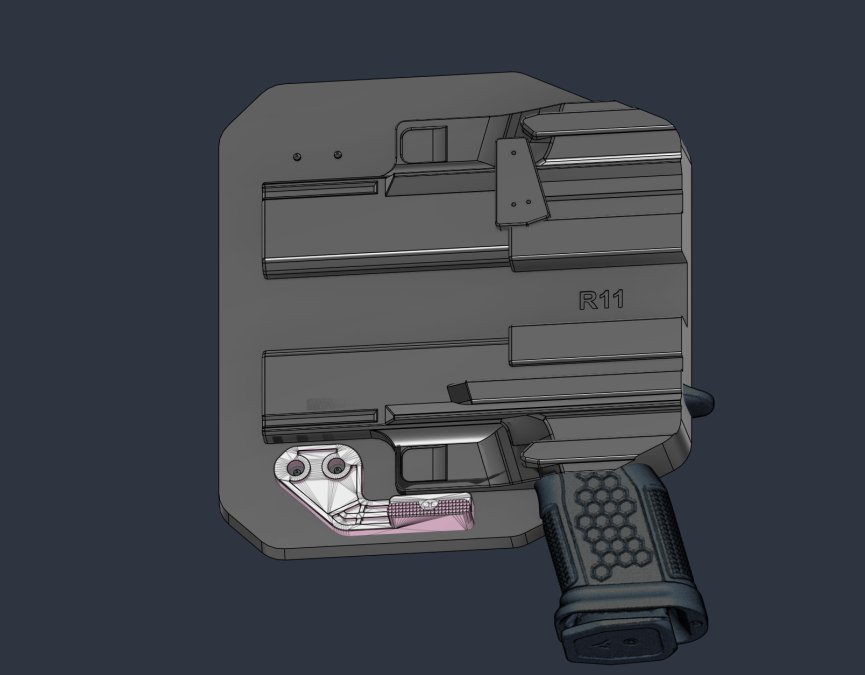
Glock 17, 22, 47, and 17 Gen 6 with TLR-7/7A/7X. The full-size Glock line gets the most coverage here because it's the most common duty and EDC platform. Each shell is precision-molded for the specific model, so a Glock 47 holster won't fit a Glock 22 by accident. Adjustable retention, two clip positions, and a sweat guard come standard. Note that these do not fit the Streamlight HLX models, which use a wider bezel and a different switch housing.
Glock 48 MOS with TLR-7 Sub. The slimline single-stack gets an optic cut for slide-mounted red dots and a light-specific mold for the TLR-7 Sub. This is the pick for carriers who want a thin profile without giving up a weapon light. The closed-end muzzle keeps the shorter Sub bezel from protruding past the shell.
SIG SAUER P320 M18 with TLR-7. Built for the M18's manual safety and TLR-7 footprint, with fully adjustable ride height and cant. A concealment claw is compatible if you carry appendix and want the grip tucked tighter. The safety shelf is molded in, so the holster will not fit a standard P320 without the manual safety.
Springfield Hellcat and Hellcat Pro with TLR-7 Sub. Both are vacuum-formed on dedicated SA/HCAT molds with a closed-end muzzle and full sweatshield. These fit the SA/HCAT version of the TLR-7 Sub specifically, not the 1913 version. If you mounted the 1913 Sub, order the 1913 shell instead.

GS M1X Frame for Glock 26X with TLR-7 Sub. Molded for the GlockStore GS M1X frame, this one covers the compact-slide, extended-grip build with the TLR-7 Sub mounted. Because the M1X frame changes the dust cover geometry, a standard Glock 26 holster will not retain the pistol correctly.
OWB and Paddle Options for TLR 7A
OWB carry makes sense when concealment isn't the constraint. The Glock 17 TLR-7/7A/7X OWB Paddle Holster at $79.99 uses a high-strength paddle that goes on and off without threading a belt, while the adjustable retention screw lets you dial in draw resistance for training or duty-style use.
The open-muzzle design accommodates threaded barrels and extended slides, which matters if you run a compensator or a longer aftermarket barrel. Ride height keeps the pistol close to the body for control and reduced movement during rapid strings of fire. For range work, instruction, and open carry where permitted, this is the more practical platform. For everything else, IWB remains the better default.
Maintenance and Cleaning of Light-Bearing Holsters
Light-bearing holsters collect more debris than plain ones because the light cut creates an open channel near the muzzle. A quick routine keeps retention consistent and protects your pistol's finish.
- Wipe the inside of the shell with a dry microfiber cloth weekly during heavy carry.
- Check the retention screw monthly; vibration and daily flex loosen it over time.
- Clear dust and lint from the light cut and trigger guard channel with a soft brush.
- Inspect the shell for cracks or stress marks around the mounting hardware.
- Re-test retention after any cleaning or hardware change.
Kydex is durable, but it isn't indestructible. Heat is the real enemy: leaving a holster on a dashboard in summer can soften the shell and distort the fit. Keep it out of direct sun and store it at room temperature. If the shell ever feels loose or the pistol seats without the audible click, re-check retention before carrying.
Finding a holster that actually fits a light-equipped pistol takes more research than most buyers expect, and the wrong mold shows up as a loose fit or a scratched slide within a week. Lindahl Holsters builds every shell around the exact firearm and light combination, with adjustable retention, adjustable cant and clip positions, a protective sweat guard, and a slim Kydex profile designed to reduce printing. Orders ship in 1-3 business days, military, law enforcement, and first responders get 15% off, and shipping is free on orders over $125. Find your gun model and get a holster molded for your exact setup.
Frequently Asked Questions
Does a TLR-7A holster fit a TLR-7?
A holster molded specifically for the TLR-7A will not fit a TLR-7 because the switches and body dimensions differ. The TLR-7A has ambidextrous rear switches, while the TLR-7 uses a single side switch. However, some holsters labeled for TLR-7/7A/7X are molded to accept all three models. Always check the product description for exact compatibility.
What makes a custom Kydex holster better for light-bearing setups?
Custom Kydex holsters are molded to the exact shape of your pistol and light, providing consistent retention and a smooth draw. This precision prevents the light from snagging or shifting. Mass-produced holsters often have generic light channels that can cause wobble. A custom holster also lets you choose cant, ride height, and sweat guard options for better comfort and concealment.
Can I use an IWB holster with a TLR-7A?
Yes, many IWB holsters are designed for the TLR-7A. Look for a holster with a light-specific mold and a sweat guard to protect the light and your skin. Appendix carry is popular for TLR-7A setups, but you can also carry strong-side. Ensure the holster has adjustable retention and a claw or wing for reduced printing.
How do I ensure proper retention with a light-bearing holster?
Start by adjusting the retention screw until the firearm seats with an audible click and does not fall out when inverted. You should be able to draw with moderate effort. Test by holding the holster upside down and shaking gently; the pistol should stay put. If it's too tight, loosen the screw a quarter turn at a time. Recheck after live-fire practice.
Are custom holsters worth the extra cost for everyday carry?
Custom holsters typically cost between $60 and $100, which is comparable to many mass-produced options. The benefit is a precise fit that enhances comfort, concealment, and safety. For daily carry, a holster that fits your TLR-7A and your body type reduces printing and hot spots. Many custom makers offer adjustable features and durable materials that last for years.

