


How to Carry Concealed Comfortably: A 2026 Guide
Table of Contents
- Why Comfort Matters (and What Usually Goes Wrong)
- Concealed Carry Holster Positions: Finding Your Sweet Spot
- The Best Gun Belt for Concealed Carry: Your Foundation for Comfort
- Holster Fit, Ride Height, and Cant: Dialing In Your Draw
- How to Prevent Holster Printing (Without Dressing Like a Tent)
- Body Type, Break-In, and Long-Term Ergonomics
- Common Mistakes That Make Concealed Carry Uncomfortable
- Frequently Asked Questions
Last Updated: September 13, 2026
Why Comfort Matters (and What Usually Goes Wrong)
Learning how to carry concealed comfortably is the difference between a daily habit you keep and a $150 holster that ends up in a drawer. At Lindahl Holsters, we see the same pattern repeatedly: shooters buy gear that looks right in photos but fails against real anatomy, real belts, and real movement. Discomfort rarely comes from one bad product. It comes from a system that was never dialed in: the wrong position, a floppy belt, a holster with no adjustability, and clothing that fights the draw.
Here is what most guides get wrong. They treat comfort as a holster feature. It is not. Comfort is the sum of position, belt rigidity, ride height, cant, and clothing working together. Fix one piece and the others still drag you down. Fix the whole system and carry stops being something you notice.
Below, we break down each variable and how to tune it for your body and your day.
Concealed Carry Holster Positions: Finding Your Sweet Spot
Your sweet spot is the position where the holster sits flat against your body, the grip stays tucked, and you can draw without shifting your stance. For most people that lands somewhere between the appendix position and 4 o'clock on the strong side, but the exact spot is personal.
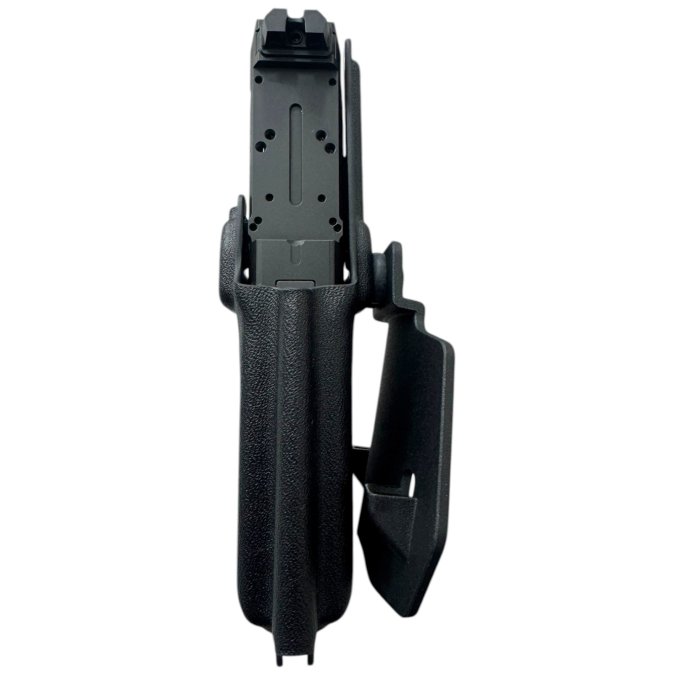
Appendix vs. Strong Side: What Changes in Real Life
Appendix carry keeps the firearm in front of the hip, which makes the draw stroke shorter and easier to protect in a crowd. Strong side carry, usually at 3 to 4 o'clock, distributes weight further back and tends to sit better for people with a flatter stomach.
The trade-off is practical, not theoretical. Appendix carry punishes a rigid belt less but demands more attention to ride height, because a holster that sits too low digs into the thigh when you sit. Strong side carry hides better under a jacket but prints more when you bend forward. Try both with an unloaded firearm before you commit.
The Best Gun Belt for Concealed Carry: Your Foundation for Comfort
The best gun belt for concealed carry is a stiff, correctly sized belt that carries the weight of the holster and firearm without sagging or rolling. A quality gun belt does more for comfort than any holster upgrade, and it is the piece most new carriers skip.
Stiffness, Width, and Why a Stiff Belt Beats a Floppy One
A floppy dress belt lets the holster rotate outward, which pulls the grip away from your body and creates printing. A stiff belt holds the holster vertical and spreads the load across your hips instead of a single pressure point. Width matters too: a wider belt distributes weight better, but it must still thread through your holster clips and pant loops. Match belt thickness to your clip design, because an over-thick belt can make clips hard to seat and slow your draw.
Holster Fit, Ride Height, and Cant: Dialing In Your Draw
Fit, ride height, and cant are the three adjustments that turn a holster from tolerable into comfortable. Custom Kydex molded to your specific firearm model, like the holsters we build at Lindahl Holsters, gives you a shell that holds retention without excess material pressing into your hip.
Ride height controls how deep the firearm sits. Higher means a faster draw but more visible grip; lower means better concealment but more pressure when seated. Cant is the angle of the holster. A slight forward cant helps strong side carry clear the hip; a neutral or reverse cant often suits appendix carry better. Adjust one variable at a time and test it while sitting, standing, and walking.
How to Prevent Holster Printing (Without Dressing Like a Tent)
Preventing holster printing comes down to breaking up the outline of the grip, not hiding your whole body under oversized clothing. Printing is the visible outline of the firearm or holster through fabric, and it is the concern we hear about most from appendix carriers. Selecting patterns and textures that naturally disrupt these contours is far more effective than relying on bulky layers, especially when you integrate pieces of comfortable casual clothing into your daily wardrobe.
Clothing Choices That Actually Help
Patterns, texture, and structured fabrics hide outlines far better than baggy shirts. A patterned button-down drapes over a grip; a thin, tight t-shirt shows every edge. Darker colors and slightly longer hems help, and a good holster wedge or concealment wing presses the grip inward so there is less to hide in the first place. Our ModWing Concealment Wing Kit uses your belt to rotate the grip toward your body, which reduces printing without changing how you dress.

| Problem | Adjustment | Effect |
|---|---|---|
| Grip pushes outward | Add a concealment wing or claw | Tucks the grip toward the body |
| Holster digs when seated | Raise ride height | Less pressure on the thigh |
| Belt sags under weight | Switch to a stiff gun belt | Holds the holster vertical |
| Outline shows through fabric | Choose patterned, structured tops | Breaks up the silhouette |
| Clip shifts during the day | Upgrade to a steel clip | Locks position in place |
Body Type, Break-In, and Long-Term Ergonomics
Body type and break-in decide whether a setup that feels fine in the store still feels fine after eight hours. The mistake is treating "body type" as a single variable. What actually changes the fit is the relationship between three measurements: waist circumference, the drop from waist to hip, and how much soft tissue sits between the holster and the pelvic bone. Two carriers at the same weight can need opposite setups because their hip structure differs.
Matching the Setup to Your Build
Fuller midsection. A higher waist-to-hip ratio pushes an appendix holster outward, so the grip tips away from the body and prints. Strong side carry at 3:30 to 4:30 usually sits flatter because the holster rides on the hip shelf instead of the belly. If you want to keep appendix, raise ride height so the shell clears the fold at the waistband and add a wedge at the muzzle end to press the grip in.
Lean or athletic build. Less soft tissue means less padding between Kydex and bone. Appendix carry often works well because the holster sits in the natural hollow of the inguinal crease, but a low-riding shell will dig into the thigh the moment you sit. A mid or high ride height plus a small wedge solves most of it.
Broad shoulders, narrow waist. The classic V-shape makes strong side carry print at the grip because the shirt drapes away from the body at the waist. Appendix carry hides better here, and a claw or wing becomes almost mandatory rather than optional.
Short torso. There is less vertical real estate between the belt line and the ribcage, so a long holster body or a high-riding grip pokes into the ribs when you bend. Favor a shorter shell and a slight forward cant.
A practical way to find your starting point: stand relaxed, place two fingers just inside the point of your hip bone, and note where the holster body would sit. If that spot is soft tissue rather than bone, expect to need a wedge. If it is bone, expect to need padding or a higher ride.
The Break-In Period Nobody Warns You About
New gear has a break-in period, but it is your body that breaks in, not the Kydex. Kydex does not stretch. What changes over the first one to two weeks is the belt molding to your waist curve, the clips settling into a consistent position on the belt, and your nervous system recalibrating to pressure that initially feels intrusive.
A realistic timeline:
- Days 1-3: Expect awareness of every edge. This is normal and is not a reason to return gear.
- Days 4-7: The belt takes a set and the holster stops shifting. Most "this is finally working" moments land here.
- Weeks 2-3: Pressure points either fade or reveal themselves as genuine fit problems. If a specific spot still hurts at week three, it is a geometry issue, not a break-in issue.
Give any setup a full week of daily carry before you judge it, and change only one variable at a time, ride height, then cant, then wedge. Changing three things at once tells you nothing about which one helped.
Long-Term Ergonomics: The Part Most Guides Skip
Carrying a firearm is a repetitive load. A holster and pistol combination commonly adds one to two pounds to one side of the body, worn for eight to sixteen hours a day (nssf.org). That is a small load, but it is asymmetric and constant, and the body adapts to it the same way it adapts to any repeated posture: by compensating.
The compensation shows up in predictable places. Hip and lower back soreness on the carry side is the most common complaint. Some carriers develop a habitual lean or a shortened stride on the carry side. Others notice tightness in the hip flexor or the outside of the thigh after long seated stretches.
What actually helps:
- Alternate positions when you can. If your wardrobe and daily routine allow it, rotating between appendix and strong side on different days spreads the load.
- Keep the belt snug, not tight. A belt tight enough to cut into the waist creates its own pressure problem and does nothing for retention that a properly sized belt would not already do.
- Raise ride height if you sit for a living. Pressure on the thigh while seated is the single most common source of daily soreness, and it is almost always a ride-height problem rather than a holster problem.
- Add a wedge or pad. A foam wedge at the muzzle end does two jobs: it tucks the grip and it spreads contact pressure over a larger area instead of a single edge.
- Take the rig off when you get home. There is no ergonomic benefit to wearing a holster on the couch.
If soreness persists past a couple of weeks of adjusted carry, treat it like any other repetitive-load issue and talk to a physician or physical therapist rather than pushing through it (mayoclinic.org). Discomfort that changes how you walk is a signal, not a rite of passage.
Common Mistakes That Make Concealed Carry Uncomfortable
The same handful of mistakes show up again and again. Fixing them costs little and changes everything.
- Buying the holster before the belt. A quality gun belt is the foundation; a great holster on a weak belt still sags.
- Skipping the break-in period. Give new gear a week of daily carry before deciding it does not work.
- Setting ride height too low. It hides well but digs into the thigh every time you sit.
- Ignoring cant. A few degrees of adjustment often fixes a draw that feels awkward.
- Over-tightening the belt. Snug enough to hold the holster, not so tight it cuts circulation.
- Choosing clothing that fights the draw. Structured, patterned tops beat tight, thin ones every time.
For a more secure hold, a steel clip such as the DCC Monoblock IWB Belt Clip anchors the holster so it stays put through the day.

Comfortable concealed carry is a system, not a single purchase, and getting the position, belt, and holster geometry right takes a little patience. Lindahl Holsters builds custom Kydex holsters molded to your exact firearm model, with IWB, OWB, and Level 2 duty options, adjustable clips, and concealment wings to dial in your setup. With a 1-3 business day lead time, a 15% discount for military, law enforcement, and first responders, and free shipping over $125, it is easy to start with the right foundation. Find your gun model and build a carry setup you will actually keep wearing.
Frequently Asked Questions
What is the most comfortable concealed carry method?
Comfort depends on your body type, daily activities, and clothing. Most people find inside-the-waistband (IWB) carry at the appendix or strong-side position the most comfortable because the holster sits close to the body and moves with you. A quality gun belt and a holster with adjustable ride height and cant make a bigger difference than the position itself. Try a few setups with an unloaded firearm before committing to one method.
Does a gun belt actually make concealed carry more comfortable?
Yes. A stiff gun belt distributes the weight of your firearm across your hips instead of letting it dig into one spot. Floppy belts sag, shift, and force you to constantly adjust your holster, which causes hot spots and fatigue. Look for a belt with a stiff core, reinforced stitching, and a width that matches your holster loops. The best gun belt for concealed carry is one you can wear all day without feeling the weight.
How can I adjust my carry setup to prevent printing?
Start with a holster that has adjustable ride height and cant, then add a concealment wing or claw to rotate the grip toward your body. A wedge on the back of the holster pushes the muzzle away from you, which flattens the profile. Clothing matters too: darker colors, patterned shirts, and untucked layers break up the outline. Test your setup in a mirror from multiple angles before you leave the house.
Is appendix carry or hip carry more comfortable for sitting?
Appendix carry can dig into your thigh or stomach when you sit, especially in a car or at a desk. Strong-side hip carry usually moves with your body better in those positions. If you prefer appendix, try raising the ride height slightly or switching to a holster with a softer backing. A quick adjustment before you sit down often solves the problem without changing your whole setup.

