


Kydex Magazine Carrier Benefits: Why It Beats Nylon
Table of Contents
- Why a Spare Magazine Matters for Concealed Carry
- Kydex Magazine Carrier vs. Nylon Pouches: A Direct Comparison
- How Kydex Provides Superior Retention and Security
- Comfort, Profile, and Concealment for Everyday Carry
- How to Adjust Kydex Mag Carrier Tension for Your Setup
- Maintenance, Clothing Fit, and Training Benefits
- Choose the Right Kydex Magazine Carrier
- Final Verdict: Are Kydex Magazine Carriers Worth It?
- Frequently Asked Questions
Last Updated: September 9, 2026
Why a Spare Magazine Matters for Concealed Carry
A kydex magazine carrier is a rigid, molded polymer pouch designed to hold a spare magazine securely against your belt or waistband. For anyone who carries a firearm for self-defense, a spare mag is not optional gear; it is the difference between a functional reload and a desperate search for ammunition during a critical incident. Most defensive shootings are resolved in seconds, and a malfunction or an empty gun leaves you with no options unless you have a second source of ammunition (bjs.ojp.gov). At Lindahl Holsters, we build custom Kydex carriers because we know that retention and speed are not trade-offs when your life depends on them.

Carrying a spare magazine solves the most common failure points in a defensive encounter: a double feed that requires you to ditch the partially loaded magazine, or simply running dry after a handful of rounds. Pistol reloads under stress are rarely smooth, and fumbling for a loose magazine in a pocket is a recipe for disaster. A dedicated carrier keeps the spare mag in the same spot every single day, which builds the muscle memory that makes a reload automatic. Below, we will break down exactly how a Kydex carrier outperforms softer alternatives, how to dial in the fit, and why this piece of everyday carry gear deserves more attention than it usually gets.
Kydex Magazine Carrier vs. Nylon Pouches: A Direct Comparison
The oldest debate in spare magazine carry is Kydex vs nylon magazine pouches, and the answer is not close for defensive use. Nylon pouches are soft, flexible, and cheap, but they collapse under pressure, which means the magazine can shift, print through a shirt, or even work its way out during movement. Kydex holds its shape with a rigid, molded fit that clicks around the magazine body, providing consistent friction retention every time you draw.
| Feature | Kydex Carrier | Nylon Pouch |
|---|---|---|
| Retention | Rigid, audible click, consistent | Soft, varies with wear and stretch |
| Bulk Reduction | Low profile, hugs the body | Bulky, fabric layers add thickness |
| Moisture Resistance | Non-absorbent, quick drying | Absorbs sweat and moisture |
| Abrasion Resistance | High, resists wear and tear | Frays, edges wear over time |
| Speed of Reload | Indexes mag in same spot each draw | Mag can shift, slowing the draw |
The trade-off is comfort during the break-in period. A rigid carrier takes a few days to conform to your body, while nylon is soft from day one. For training and duty use, the rigidity of Kydex is a feature, not a flaw. A US Concealed Carry Association guide on spare magazine carry notes that consistent placement and secure retention are the two pillars of a reliable reload, and only a rigid carrier delivers both under stress.
How Kydex Provides Superior Retention and Security
Retention is the primary job of any magazine carrier, and Kydex excels because of its molded fit. A kydex magazine carrier is formed around the exact dimensions of your magazine, creating a shell that grips the body and baseplate with friction. This passive retention holds the mag securely during running, climbing, or fighting, but releases cleanly when you draw with purpose. Nylon relies on an elastic band or flap, which either grips too loosely or slows down your reload.

Most quality Kydex carriers let you adjust the tension by loosening the retention screws slightly. This is a major advantage over sewn fabric, which offers no adjustment once it leaves the factory. The rigid polymer also resists moisture, so sweat does not weaken the grip over time, and it will not absorb oils or solvents that break down softer materials. For duty use, a carrier that fails to retain a magazine during a physical struggle is a liability, which is why law enforcement professionals consistently choose rigid polymer over fabric for spare ammunition.
Comfort, Profile, and Concealment for Everyday Carry
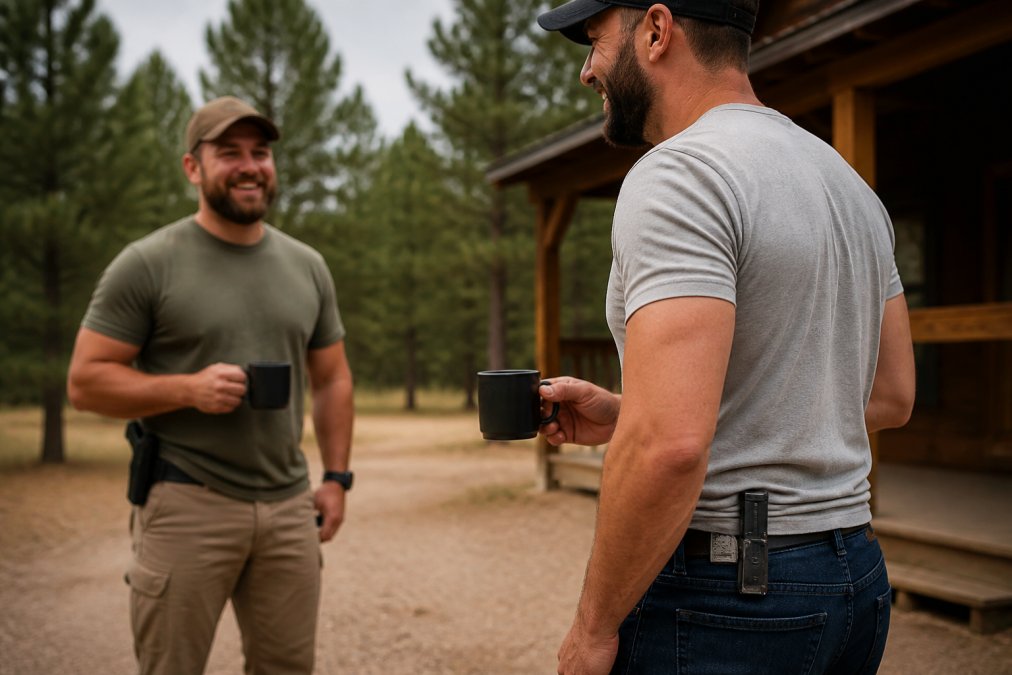
Comfort is where most carriers fail, and it is the reason many people stop carrying a spare magazine altogether. A well-designed Kydex carrier is thin, typically under half an inch at the widest point, which reduces bulk and keeps the magazine pressed flat against your belt line. Inside-the-waistband (IWB) placement puts the mag between your hip and your pants, while outside-the-waistband (OWB) options ride on the belt for easier access. Both work, but IWB offers superior concealment for everyday carry under a t-shirt or light cover garment.
The Hidden Variable: Clothing and Belt Compatibility
Most guides stop at "low profile," but the real-world concealment equation depends on how the carrier interacts with your specific wardrobe. The two most common failure points are belt width and fabric weight.
Belt width. Kydex carriers typically use either a belt clip or a loop-style attachment. A standard belt clip is designed for belts up to 1.75 inches wide, which covers most gun belts. However, if you wear a dress belt that is 1.25 inches or narrower, the clip can wobble, causing the magazine to cant outward and print. Conversely, a 2-inch competition belt will not seat properly in a standard clip, forcing the carrier to sit at an angle. Before buying, measure your daily belt and match it to the clip's stated width range. Some carriers offer replaceable clips, letting you swap between a standard belt clip and a soft loop for different pants.
Fabric weight and waistband tension. A Kydex carrier clipped to a thin, stretchy athletic waistband will pull the fabric outward, creating a visible bulge. Stiffer materials like denim or canvas hold the carrier flat against your body. For those who carry in gym shorts or sweatpants, a clip alone will not work; you need a carrier with a Ulticlip or a similar clip that grips the fabric without a belt. This is a niche but critical detail for deep-concealment setups.
Ride Height and Cant: The Mechanics of Concealment
Ride height and cant are not just comfort features; they are concealment tools. Ride height determines how much of the magazine sits above the belt line. A high ride position (where the baseplate sits at or above the belt) is easier to access but prints more under a fitted shirt. A low ride position (where the carrier sits deeper inside the waistband) hides better but requires a deeper reach and can be uncomfortable when sitting.
Cant, the forward or backward tilt of the magazine, affects both access and printing. A forward cant (10 to 15 degrees) matches the natural forward motion of your support hand moving to your belt, which speeds up the reload (usconcealedcarry.com). A neutral cant (0 degrees) is best for appendix carry, where the magazine sits parallel to your body's midline. A rearward cant is rarely used for pistol magazines but can help with strong-side OWB carry under a jacket.
The Printing Test
A practical test for concealment is the "bend and reach" check. Put on your normal cover garment, then bend forward at the waist as if tying your shoes. If the magazine baseplate or carrier clips create a visible ridge against your shirt, the ride height is too high or the cant is wrong. Adjust the carrier one position at a time and repeat the test. Most shooters find that a 5-degree forward cant and a mid-ride height offer the best balance between access and concealment under a standard untucked shirt.
The Trade-Off Nobody Mentions: Holster-to-Carrier Interference
When carrying IWB at the appendix position, the magazine carrier on your support side can interfere with your holster on your strong side. If both are positioned too far forward, the holster and carrier can pinch your hip bone or create a "double bulge" that prints. The fix is to offset them: run the holster at the 1 o'clock position and the magazine carrier at the 8 or 9 o'clock position (for a right-handed shooter). This separation also prevents the two rigid shells from clicking against each other when you walk, which is an audible giveaway in a quiet room.
A low-profile, adjustable Kydex carrier disappears under normal clothing, but only when you match it to your belt, your pants, and your holster position. That level of detail is what separates a comfortable everyday setup from one that sits in a drawer after a week.
How to Adjust Kydex Mag Carrier Tension for Your Setup
A common question from new carriers is how to adjust Kydex mag carrier tension, and the process takes less than two minutes. Most Kydex carriers use two screws that pinch the shell around the magazine. Tightening the screws increases retention, while loosening them makes the draw easier. The goal is a firm hold that keeps the mag in place during movement but releases with a smooth, deliberate pull.
- Unload the magazine completely before making any adjustments.
- Loosen both retention screws a quarter turn at a time.
- Insert the magazine and test the draw with your support hand.
- Tighten the screws until the mag clicks in firmly and does not shift when shaken.
- Practice drawing the mag 20 to 30 times to confirm consistent release.
The right tension varies by magazine, since polymer and steel mags have different surface friction. Aluminum baseplates and textured extensions also change how the mag seats in the shell. Test your setup while wearing the carrier, not on a bench, because your belt and body pressure affect how the carrier holds the magazine.
Maintenance, Clothing Fit, and Training Benefits
Kydex is nearly maintenance-free, but it is not zero-maintenance. Wipe the shell clean with a dry cloth to remove dust and lint, and check the retention screws monthly for loosening. Unlike leather or nylon, Kydex will not absorb sweat, so it will not develop odors or break down from moisture exposure. This durability is why Kydex carriers survive years of daily use without losing their shape or grip.
The training benefit of a dedicated carrier is often overlooked. When your spare magazine is in the same position every day, reloads become a reflex rather than a conscious action. Dry-fire practice with your carrier builds the muscle memory for a reload under stress, and a rigid carrier indexes the magazine in the same orientation every time. A loose nylon pouch that shifts around your belt trains you to search for the magazine, which is a habit that gets people hurt in a real encounter.
Choose the Right Kydex Magazine Carrier
Choosing the right carrier comes down to how many magazines you carry and where you carry them. A single carrier is the standard for everyday carry, holding one spare mag at the hip or appendix position. A dual carrier suits competition shooters or duty officers who need a second reload on the belt. For rifle shooters, dedicated AR-15 carriers hold 5.56 magazines securely for range days or classes.
At Lindahl Holsters, our SINGLE PISTOL MAGAZINE CARRIER SHELLS work in both IWB and OWB configurations, giving you flexibility without buying two separate pieces of gear. For those who want more capacity, the DUAL PISTOL MAGAZINE CARRIER SHELLS keep two mags in a simplified, low-profile package. Rifle shooters can pair either with our AR-15 OWB carrier shells for a complete loadout.

Final Verdict: Are Kydex Magazine Carriers Worth It?
Kydex magazine carriers are worth the investment for anyone who carries a firearm for self-defense, trains regularly, or competes. The rigid molded fit provides retention that fabric cannot match, the low profile keeps your setup concealable, and the durability means you buy it once instead of replacing stretched-out nylon every year. At roughly the price of a box of defensive ammunition, a carrier that reliably holds your spare mag is one of the best value upgrades to your carry setup.
The one honest limitation is the initial stiffness. A new Kydex carrier can feel rigid against your body for the first few days, and it will not conform to your shape the way leather does. That break-in period is a small price for gear that holds its form for years. For most carriers, the answer is clear: a well-fitted Kydex magazine carrier is the standard for a reason, and it deserves a place on your belt every day.
Frequently Asked Questions
Are Kydex magazine pouches better than nylon?
Kydex magazine pouches offer rigid, positive retention that holds the magazine securely regardless of movement or moisture. Nylon pouches rely on friction from elastic or fabric, which can stretch out over time and absorb sweat, leading to inconsistent retention. Kydex also provides a distinct click when the magazine is seated, confirming a secure fit. For concealed carry or duty use, the kydex magazine carrier benefits of lasting retention and durability give it a clear advantage over nylon.
How do I adjust the tension on my Kydex magazine carrier?
Most Kydex carriers use a retention screw near the top. To increase tension, turn the screw clockwise until the magazine clicks firmly into place. To decrease tension, turn it counter-clockwise. The goal is a secure fit that holds the magazine through movement but still allows a smooth, consistent draw. Check the tension periodically, as screws can loosen with use. A properly adjusted carrier will not let the magazine shift or fall out during everyday carry.
Is a Kydex magazine carrier necessary for concealed carry?
A Kydex magazine carrier is not legally required, but it is a critical part of a reliable concealed carry setup. Carrying a spare magazine provides a backup if a round fails to feed or a magazine malfunctions. A dedicated carrier keeps the spare magazine secure, protected, and positioned for a fast reload. Kydex carriers are particularly effective because they maintain their shape and retention over time, unlike softer materials that can collapse or lose grip.
A reliable reload starts with a carrier you can trust under pressure. Lindahl Holsters builds custom Kydex magazine carriers with precision-formed shells for a secure fit, plus IWB and OWB options that suit any carry style. Our carriers ship within 1-3 business days, and military, law enforcement, and first responders save 15% on every order. Find your gun model and build a carry setup that will not let you down.

