


SIG Sauer P385: Holster Guide for the New Pistol
Table of Contents
- What Is the SIG Sauer P385?
- SIG Sauer P385 Features and Platform Details
- Why P365 Holsters Won't Fit the P385
- Kydex Holster Retention: Why Fitment Testing Matters
- Optic-Ready Holster Benefits for the SIG Sauer P385
- When Will Lindahl Holsters Release a SIG P385 Holster?
- What to Look for in the Best Holster for SIG P385
- Conclusion
- Frequently Asked Questions
Last Updated: September 24, 2026
What Is the SIG Sauer P385?
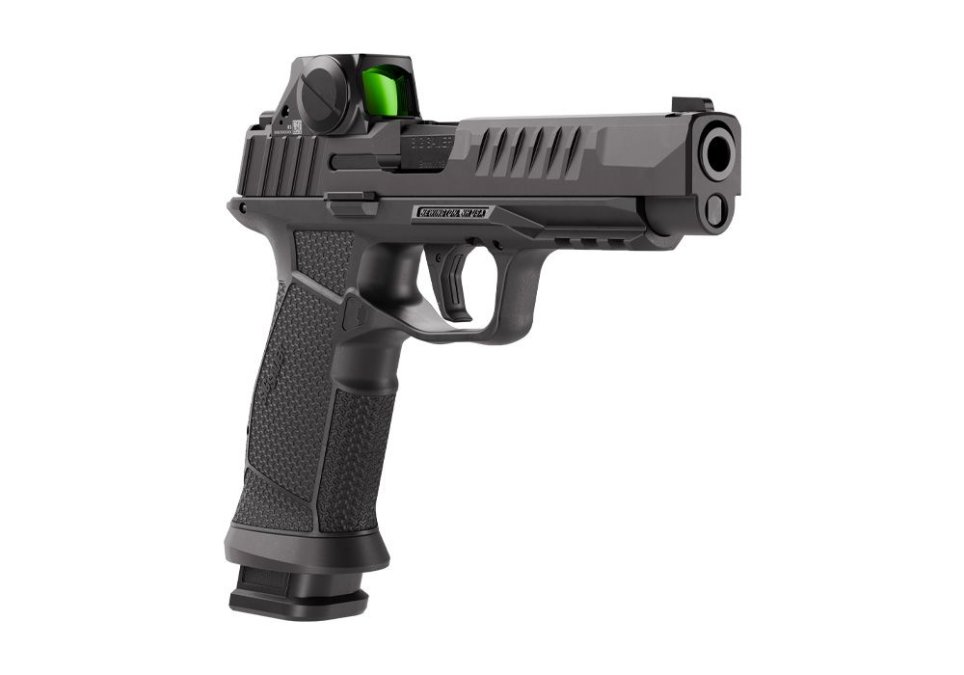
The SIG Sauer P385 is a newly announced striker-fired pistol that has quickly become one of the most searched handguns among concealed carry owners, and this guide from Lindahl Holsters covers what is actually known about it so far. Interest is running well ahead of availability. That gap between announcement and shelf stock is exactly where bad information spreads, so it helps to be precise about what has been confirmed and what has not.
SIG Sauer has confirmed the P385 as a new striker-fired addition to its lineup. The company has not yet published a full specification sheet covering dimensions, weight, trigger pull weight, or magazine capacity, and no release date has been formally announced. Anyone quoting exact figures right now is guessing.
That matters if you are already shopping for a SIG Sauer P385 holster. A holster is a fitted piece of equipment. It is built around the actual geometry of a specific pistol, not around a model name.
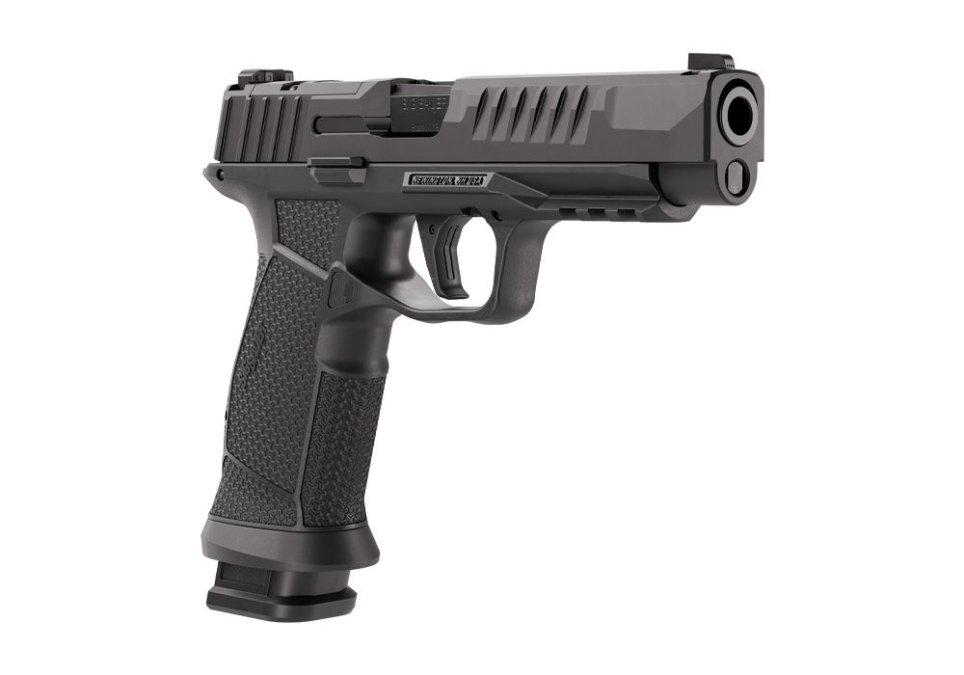
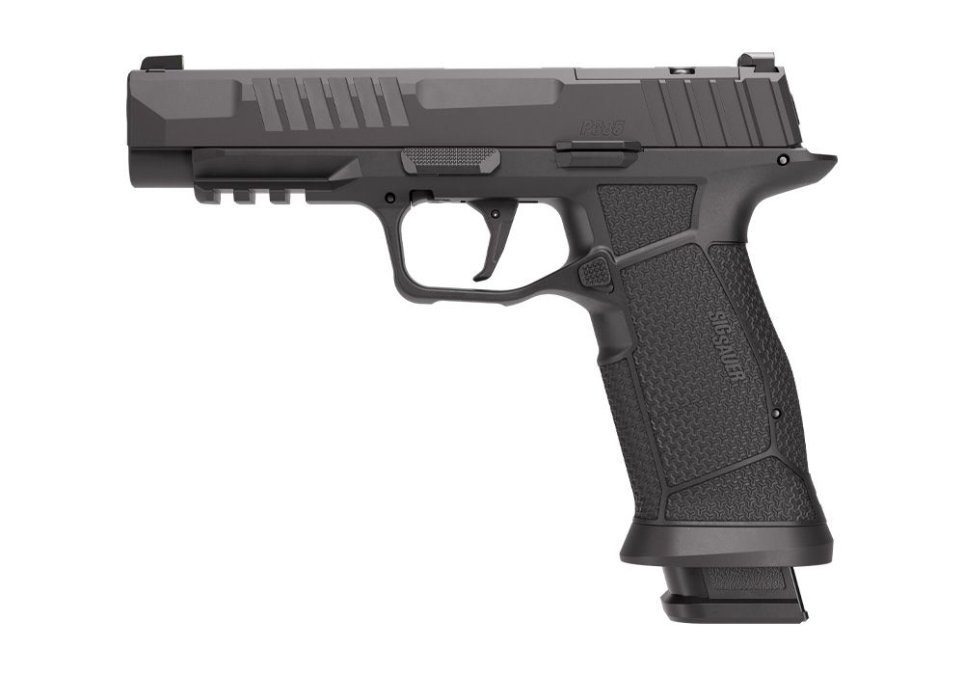
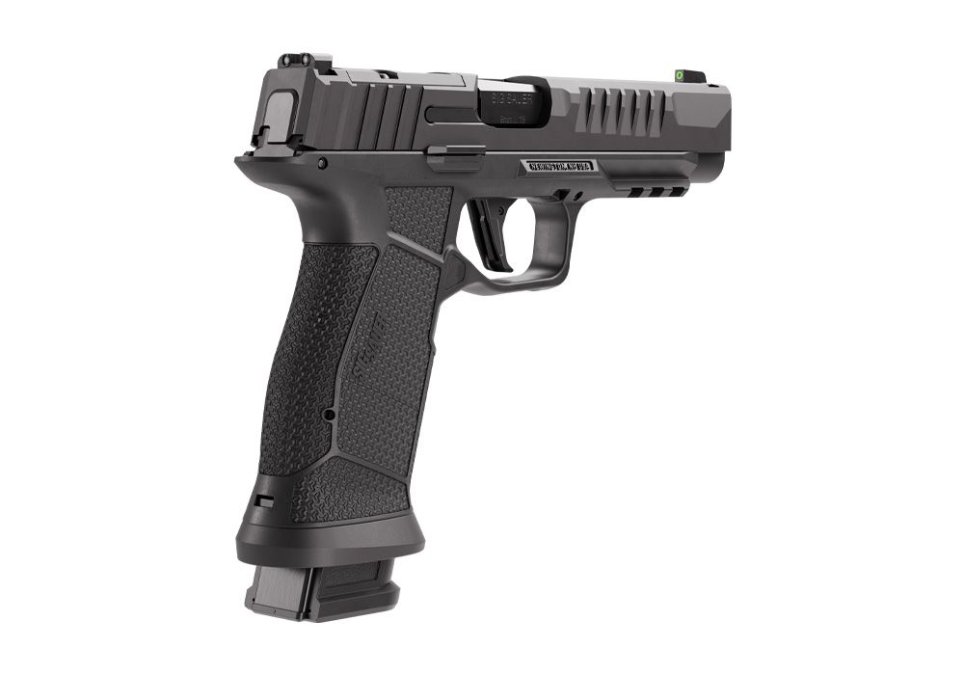
Purchase a Sig Sauer P385 here: Shop Now
Below, we break down the platform details SIG Sauer has described, explain why P365 holsters are not a safe assumption, and cover what to look for in a P385 holster once dedicated options exist. We will also tell you plainly where Lindahl Holsters stands on development.
SIG Sauer P385 Features and Platform Details
The features SIG Sauer has highlighted center on a modular, striker-fired design aimed at both duty and concealed carry use. Because SIG Sauer has not published a full specification sheet, this section sticks to what has been described and explains what each attribute means for the person who will eventually carry the pistol, and for the holster that has to hold it.
Modular Striker-Fired Architecture
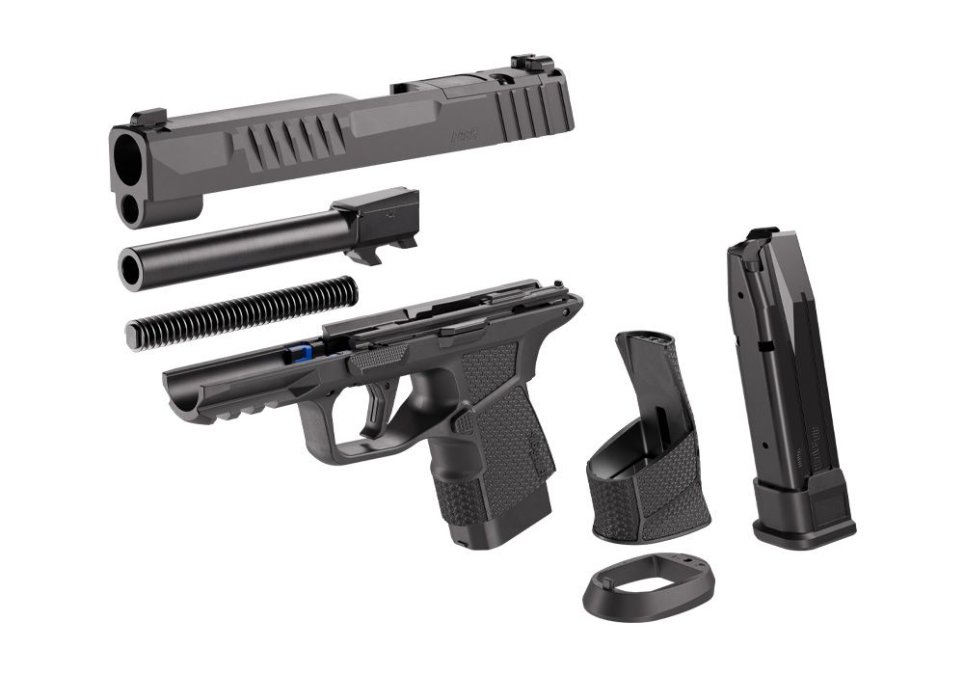
The P385 uses a modular platform approach, the same general philosophy SIG Sauer applied across its recent striker-fired pistols. In a modular design, the fire control unit, the serialized chassis containing the trigger mechanism, sear, and striker assembly, is the legally regulated firearm, and it can be moved between grip modules. Swapping a grip module changes circumference, backstrap profile, and therefore how the pistol indexes in the hand without changing the core firearm.
For holster makers, modularity is a complication, not a footnote. If grip modules vary in size or profile, a shell molded around one configuration may not provide the same retention on another. Retention in a Kydex shell comes from contact at defined points, typically the trigger guard, the ejection port, and the slide, and if the frame geometry those points sit on changes, the fit changes with it. That is one reason a dedicated P385 holster has to be built and tested against the specific configuration it is meant to carry, not against a family name.
Low Bore Axis and Recoil Management
Bore axis is the vertical distance between the centerline of the barrel and the shooter's hand, specifically, the web of the hand high on the backstrap. A lower bore axis reduces the lever arm the pistol has to rotate around during recoil, which is why low-bore-axis designs tend to produce less muzzle flip and a flatter sight picture for faster follow-up shots. The trade-off is that a very low bore axis can change how the pistol points for shooters used to a higher axis, and that pointing difference shows up in how the pistol presents during the draw.
SIG Sauer has also described a recoil dampening system in the P385. Recoil dampening in a striker-fired pistol is typically achieved through a captured recoil spring assembly tuned to the slide mass and barrel length, sometimes paired with geometry in the frame that controls how the slide cycles. Reduced felt recoil changes how a shooter grips and presents the pistol, and grip and presentation are exactly what a holster has to accommodate, a shell that positions the firearm poorly for a clean draw is a problem regardless of how soft the pistol shoots.
Optic-Ready Slide and Trigger Block Design
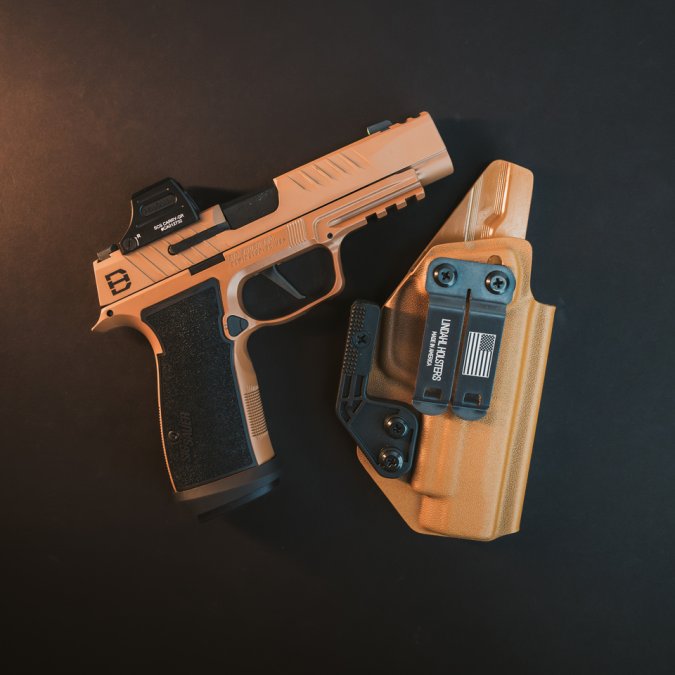
The P385 slide is described as optic-ready, meaning it accepts a red dot sight without a separate milling service. On most modern optic-ready pistols, that means a machined cut with a removable cover plate and a specific mounting footprint, plus screw bosses sized for the optic's mounting screws. An optic sits above the bore and adds width and height to the pistol, which is why an optic-ready holster needs clearance built in rather than cut after the fact.
SIG Sauer has also pointed to an updated trigger block design. The trigger block is the interface between the trigger, the trigger bar, and the striker safety, it governs how the trigger moves and how the firing pin block is disengaged. Trigger block geometry also determines how much of the trigger guard is exposed and where a holster's trigger coverage needs to sit. Get that wrong and you have a retention problem, not just a comfort problem.
Duty-Sized Performance vs. Compact Versatility
The P385 is positioned to serve both duty and concealed carry use, which is a harder brief than it sounds. Duty pistols are typically carried openly in a belt holster where access, retention, and light-bearing capability matter most. Concealed carry pistols are carried inside the waistband where profile, cant, and how the grip tucks against the body matter most. A pistol marketed for both has to work in both roles, and that means the holster lineup for it has to cover both roles too, an IWB shell and an OWB shell built around the same pistol, not one shell stretched to do both jobs badly.
Why P365 Holsters Won't Fit the P385
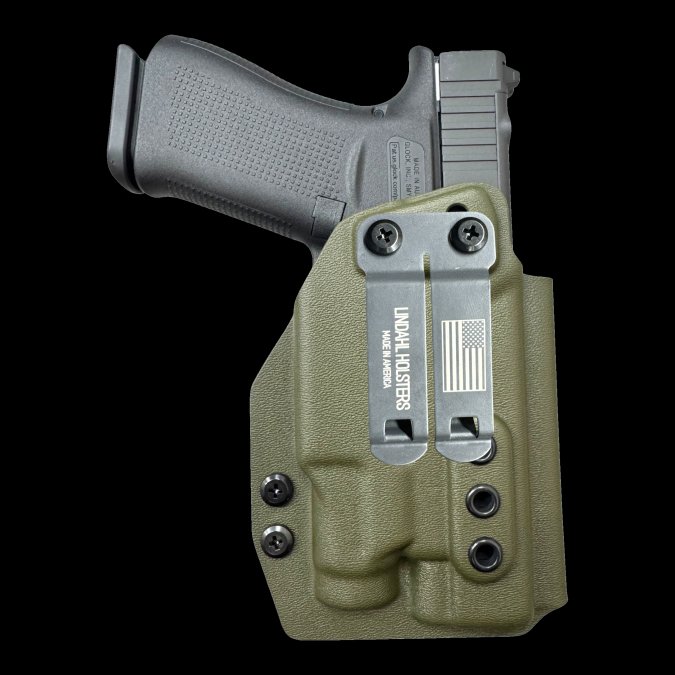
P365 and P320 holsters will not fit the P385, and no holster maker should tell you otherwise without testing. The P385 is a distinct model with its own slide geometry, frame dimensions, and trigger block layout. Similar branding does not mean identical dimensions.
Kydex holsters achieve retention through precise contact with specific points on the firearm: the trigger guard, the ejection port, the slide, and often the dust cover. A shell molded around a P365 creates contact in the wrong places on a P385. The result is usually one of two failures. Either the pistol rattles with no meaningful retention, or it seats so tightly that drawing it requires two hands.
There is a safety dimension here that gets glossed over. If a shell does not lock the trigger guard correctly, the trigger can be exposed or partially accessible while the pistol is holstered. That is the failure mode that ends up in an incident report.
Kydex Holster Retention: Why Fitment Testing Matters
Kydex holster retention is a measurable property, not a marketing claim, and it can only be established through physical fitment testing on the actual firearm. A properly built Kydex holster holds the pistol by contact at defined points and releases it with consistent resistance on the draw.
The process is not complicated, but it is not optional either. A maker needs the physical pistol, or a dimensionally accurate mold of it, to form the shell. Then the shell has to be tested for retention force, checked for trigger guard coverage, verified that the optic clears without contact, and cycled repeatedly to confirm the retention does not loosen with use.
What most guides miss is that retention is a range, not a single setting. A holster that holds too loosely will drop the pistol during movement. One that holds too tightly slows the draw under stress, which is the exact moment you cannot afford it.
This is why Lindahl Holsters does not declare compatibility with a new pistol until a dedicated mold exists and the finished holster has been tested. Assuming a fit is faster. It is also how people end up with a drawer full of holsters that do not work.
Optic-Ready Holster Benefits for the SIG Sauer P385
An optic-ready holster is cut and molded to clear a red dot sight without the sight contacting the shell, and it delivers three concrete benefits for a P385 owner. The first is protection. A red dot is a glass lens sitting on top of a reciprocating slide. A holster with insufficient clearance can press against the optic body, shift the zero over time, or crack the lens.
The second is draw consistency. When the shell is molded with optic clearance built in, the sight tracks through the same path on every draw. When you cut clearance into a finished holster after the fact, you remove material unevenly and change how the pistol seats.
The third benefit is simpler: you avoid buying twice. If you plan to run a red dot on a P385, order an optic-ready holster from the start. Buying a standard holster and replacing it later costs more than doing it once.
When Will Lindahl Holsters Release a SIG P385 Holster?
Lindahl Holsters is actively working to develop a dedicated SIG Sauer P385 holster, and development is underway now. We are moving as quickly as we can without cutting the steps that make a holster safe to carry.
That means we are not skipping fitment testing to hit a date. Building a P385 holster properly requires the actual pistol or an accurate mold, forming the shell, verifying trigger guard coverage, confirming retention through repeated draw cycles, and checking optic clearance for the sight you intend to run. A holster that ships fast and fits badly is worse than no holster at all.
When the P385 shell is ready, it will be built to the same standard as the rest of our line: American-made Kydex, optic-ready designs, adjustable retention, and a lifetime warranty. Our standard lead time on custom Kydex runs one to three business days once a mold is in production, and we offer a 15% discount for military, law enforcement, and first responders.
Watch LindahlHolsters.com for the P385 listing. That page will be the first place availability is confirmed.
What to Look for in the Best Holster for SIG P385
The best holster for SIG P385 owners will be one molded specifically for the P385, and until dedicated shells exist, the right move is to wait rather than improvise. Most holster guides stop there. The more useful question is what to actually evaluate when a P385 shell does hit the market, and what to do with the P365-era gear you may already own.
The Gear-Transition Question Nobody Answers
If you already carry a P365-family pistol, you have a belt, a holster drawer, and possibly a weapon-mounted light and a red dot you intend to move to the P385. The transition cost is real, and it is the part of a new-pistol launch that marketing pages skip. Three things carry over cleanly and three do not.
What typically carries over:
- The belt. A proper gun belt is sized to the wearer, not the pistol, and a stiff reinforced belt works across platforms.
- The optic. A red dot is mounted to the slide, not the holster, so the same sight can move to the P385 if the slide cut footprint matches the optic's mounting pattern.
- Your carry position and cant preference. If you carry appendix at a given ride height, that preference transfers, but the shell that delivers it does not.
What typically does not carry over:
- The holster shell. A shell is molded around one pistol's geometry. A P365 shell will not provide correct retention or trigger coverage on a P385.
- Light-bearing shells. A light-bearing holster is molded around the specific light body, not a generic rail. If the light model changes, the shell changes.
- Magazine carriers sized to a specific mag. If the P385 uses a different magazine body, carriers molded for P365 magazines may not retain correctly.
Planning around those three categories is how you avoid buying the same accessory twice.
Evaluation Checklist for a P385 Holster
When a dedicated SIG Sauer P385 holster becomes available, judge it on fitment evidence, not on product photography.
- Model-specific mold confirmed. The maker states the holster is molded for the P385, not "P365 family" or "similar models."
- Trigger guard fully covered. The shell should enclose the trigger guard completely with no gap at the opening.
- Retention tested and adjustable. You should be able to set retention to your preference and have it hold that setting through repeated draws.
- Optic clearance built in. If you run a red dot, confirm the specific optic is cleared, not just "optic compatible."
- Carry position options. IWB and OWB configurations should be available for the same model.
- Light-bearing option timeline. If you carry a weapon-mounted light, ask whether a light-bearing shell is planned and when.
- Warranty and returns. A lifetime warranty signals the maker stands behind the molding and the hardware.
Evaluation Criteria |
What to Check |
Why It Matters |
|---|---|---|
Mold specificity |
Stated P385 mold |
Wrong mold means wrong retention |
Trigger coverage |
Full trigger guard enclosure |
Prevents access to the trigger |
Retention |
Adjustable and repeatable |
Consistent draw under stress |
Optic clearance |
Specific sight cleared |
Protects zero and lens |
Carry position |
IWB, OWB, and light-bearing |
One platform, multiple setups |
Warranty |
Lifetime coverage |
Backs the molding and hardware |
IWB vs. OWB for the P385
Inside-the-waistband carry trades access speed and comfort for concealment. A SIG P385 IWB holster sits between the body and the waistband, which means the shell profile, the clip or loop placement, and the cant all affect how the grip prints against a cover garment. Outside-the-waistband carry trades concealment for access and is the more common choice for duty or range use. A SIG Sauer P385 IWB holster and an OWB shell are different products built around the same pistol, not one shell asked to do both.
A Note on Price and Speed
A common mistake is buying on price and speed. The holster is the one piece of gear that sits between you and the trigger every single day. Get the fitment right first, and let everything else follow.
Conclusion
The P385 is generating real interest, and the holster market has not caught up yet. That leaves owners with a choice: force a P365 holster to work and accept the risk, or wait for a shell that was actually built for the pistol. Lindahl Holsters is developing a dedicated SIG Sauer P385 holster now, with American-made Kydex construction, optic-ready designs, adjustable retention, and a lifetime warranty backing every shell. Check LindahlHolsters.com for availability, and use our gun model finder to see what is currently in production.
Frequently Asked Questions
When will a SIG Sauer P385 holster be available from Lindahl Holsters?
Lindahl Holsters is actively developing a dedicated SIG Sauer P385 holster and is working as quickly as possible to bring it to market. Proper holster development requires actual firearm fitment, retention testing, trigger coverage verification, and safe construction, so the timeline depends on completing that process. Check LindahlHolsters.com regularly for availability announcements and to find your gun model.
Will my existing P365 holster fit the SIG Sauer P385?
No. Lindahl Holsters has not confirmed that any existing P365-family holster fits the P385, and assuming compatibility is unsafe. Even small differences in slide geometry, frame dimensions, or trigger guard shape can affect retention and trigger coverage. A holster that does not properly fit can fail to hold the firearm securely or leave the trigger exposed. Wait for a holster specifically molded and tested for the P385.
What should I look for in a SIG P385 IWB holster?
A quality SIG P385 IWB holster should be molded specifically for the P385, provide adjustable retention, fully cover the trigger guard, and use durable materials like American-made Kydex. Optic-ready designs are important if you plan to run a red dot. Look for a manufacturer that tests fitment with the actual firearm rather than assuming compatibility with a similar model. Lindahl Holsters builds all of these features into its holsters.
Will the SIG Sauer P385 holster support red dot optics and weapon-mounted lights?
Optic-ready holster benefits include a cut that accommodates red dot sights without interfering with the sight or the draw. Lindahl Holsters designs optic-ready Kydex holsters, and a P385 version will follow that approach. Light-bearing options depend on confirming the P385's accessory rail dimensions and available light models. Lindahl Holsters will announce specific configurations, including light-bearing options, as development progresses.

