


TLR-7 Sub Holster Fitment Guide: Get the Right Fit
Table of Contents
- Why TLR-7 Sub Holster Fitment Is Not Universal
- TLR-7 Sub Rail Key Compatibility Explained
- SIG P365 TLR-7 Sub Holster Options
- Glock 43X MOS TLR-7 Sub Holster Fitment
- Light-Bearing Kydex Holster Fitment: How Molding Works
- TLR-7 Sub Holster Compatibility Table
- Troubleshooting Common TLR-7 Sub Holster Problems
- Conclusion: Verify Before You Order
- Frequently Asked Questions
Last Updated: October 6, 2026
Why TLR-7 Sub Holster Fitment Is Not Universal
A Streamlight TLR-7 Sub is not one light, it is a family with different rail interfaces, and that fact causes more holster returns than any other issue in concealed carry.

Three variables decide whether a holster works: your firearm model, your exact TLR-7 Sub version, and the rail key installed in that light.
The TLR-7 Sub ships in separate SKUs for different pistol families, each with a different rail key and body geometry, and holster makers mold Kydex around one specific combination. There is no universal fit.
TLR-7 Sub Rail Key Compatibility Explained
Rail key compatibility comes first, because the key is what lets the light sit tight against the trigger guard. Streamlight supplies different keys so the TLR-7 Sub can mount to different pistol rails, and the key you install changes how far forward the light sits and how it locks to the rail.

A light mounted with the wrong key can sit too far forward, too far back, or at an angle, and even a small shift changes where the light body sits inside a molded holster.
1913, SIG, and Glock Rail Keys: What Each One Does
The 1913 rail key fits pistols with a standard MIL-STD-1913 accessory rail, the most widely used interface, covering many full-size and compact pistols.
The SIG rail key is shaped for the SIG P365 family rail, setting the light at the depth and angle SIG's rail geometry requires.
The Glock rail key matches the narrower rail on slimline Glock models like the 43X and 48 MOS.
TLR-7 Sub, TLR-7 X Sub, and TLR-7 HL-X Sub: Three Different Bodies
The TLR-7 Sub, TLR-7 X Sub, and TLR-7 HL-X Sub are not the same light with a new label. They are separate bodies with their own dimensions, switch layout, and rail-key interface, and a holster molded for one will not automatically fit another.
- TLR-7 Sub, the original Sub footprint, the version most holster molds were built around, shipping in distinct SIG, Glock, SA/HCAT, and 1913 SKUs.
- TLR-7 X Sub, a later Sub body with its own switch geometry and housing shape. A holster molded for the standard TLR-7 Sub may not clear the X Sub's switches or capture its body correctly.
- TLR-7 HL-X Sub, the high-lumen Sub variant. Its bezel and head are larger than the standard Sub, so the front of the shell must be molded to clear that head; a shell built for a standard Sub can bind on the HL-X head or fail to seat the pistol.
Treat each version as its own fitment, and make sure the holster listing names the exact light version, not just "TLR-7 Sub."
How to Identify Which Version and Key You Own
Before you order, do this in order:
- Read the light body. The model marking tells you whether you have a TLR-7 Sub, TLR-7 X Sub, or TLR-7 HL-X Sub. Do not rely on the box or product page.
- Remove the light and look at the rail key. The key is the small insert that interfaces with the pistol rail; its shape tells you which interface you have, 1913, SIG, Glock, or SA/HCAT.
- Match the key to the pistol rail. A 1913 key on a slimline Glock rail, or a Glock key on a 1913 rail, is the single most common cause of a light sitting at the wrong depth.
- Photograph the key and the model marking. Keep both with your order notes so you can confirm the exact combination with the holster maker.
If you are unsure which key is installed, do not guess. Pull the light, compare the key shape to the pistol rail, and confirm the light version before you buy a holster.
SIG P365 TLR-7 Sub Holster Options
SIG P365 owners have the widest holster selection, but only if they match the right light version. The P365, P365 XL, and P365X Macro each use the SIG-pattern TLR-7 Sub, and holsters are molded specifically for those footprints.

Our lineup reflects that.
Both give you:
- Adjustable retention and cant from 0 to 15 degrees
- A slim profile for deep concealment with a light attached
- A full sweat guard to protect the firearm and your skin
- An audible click on holstering
The key point: a P365 holster is molded for the P365 rail and light position. It will not fit a Glock, and it will not fit a 1913-version light.
Glock 43X MOS TLR-7 Sub Holster Fitment
Glock 43X and 48 MOS owners need the Glock-pattern TLR-7 Sub and a holster molded for it. The slimline Glock rail is narrower than a 1913 rail, so the light sits at a different depth and the shell must match.
The same logic applies to other popular pistols. Canik and Derya models that use a 1913-style rail take the 1913-version light, and their holsters must be molded for that interface. Never assume a holster fits because the model name matches.
Light-Bearing Kydex Holster Fitment: How Molding Works
A light-bearing Kydex holster is molded around the exact shape of your firearm and weapon light together, not the gun alone.
SIG SAUER® P365X® MACRO® WTIH STREAMLIGHT® TLR-7 SUB COMPATIBLE IWB HOLSTER →
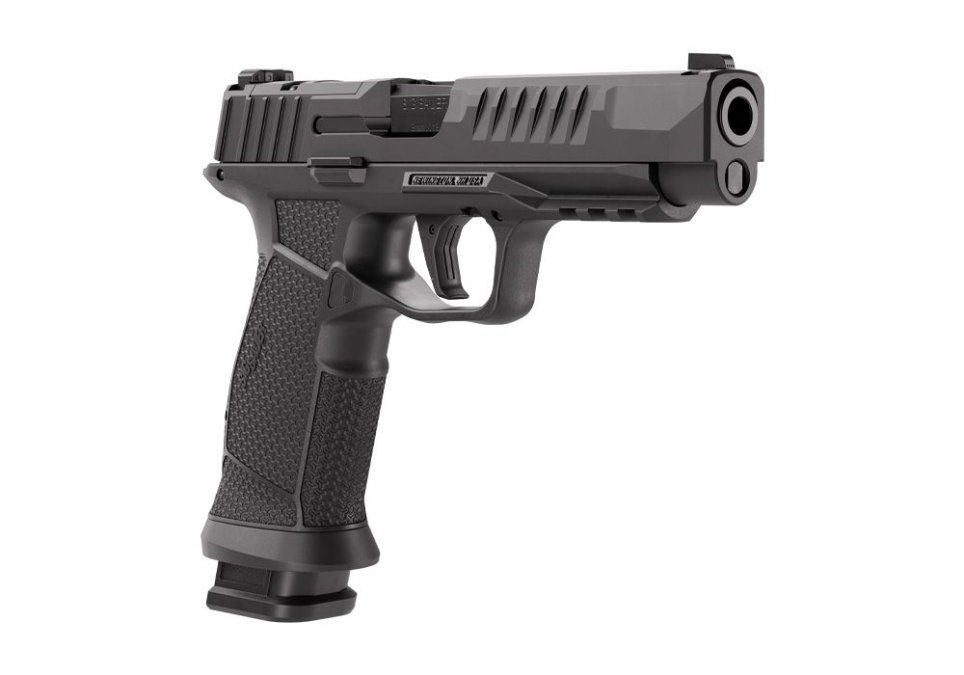
Every Lindahl holster is manufactured in-house in Riverside, California. We vacuum-form on dedicated light-bearing molds built around the exact geometry of the light version, so lock-up and draw stay consistent.
TLR-7 Sub Holster Compatibility Table
Use this table to match your pistol family to the right light version before you shop. It reflects how the light interfaces are grouped, not a claim about any single holster.
| Pistol Family | Light Version | Rail Key | Holster Molded For |
|---|---|---|---|
| SIG P365 / XL / XMacro | TLR-7 Sub (SIG) | SIG key | SIG rail footprint |
| Glock 43X / 48 MOS | TLR-7 Sub (Glock) | Glock key | Glock slimline rail |
| Hellcat Pro | TLR-7 Sub (SA/HCAT) | SA/HCAT key | SA/HCAT geometry |
| 1913-rail pistols (Canik, Derya, others) | TLR-7 Sub (1913) | 1913 key | 1913 rail footprint |
| Same pistol families, newer light | TLR-7 X Sub | Version-specific key | X Sub body geometry |
| Same pistol families, newer light | TLR-7 HL-X Sub | Version-specific key | HL-X Sub body and head geometry |
The table also covers the newer versions.
Our Hellcat Pro with TLR-7 Sub 1913 IWB holster is molded for the 1913 version, and our Hellcat Pro with TLR-7 Sub SA/HCAT IWB holster is molded for the SA/HCAT version.
Fitment Verification Checklist Before You Order
This is the step most buyers skip, and the one that prevents returns. Work through it in order and do not order until every line is confirmed.
- Exact pistol model and generation. A P365 and a P365 XMacro share a family name but not a footprint; a Glock 43X and a 48 MOS share a rail pattern but not a slide length.
- Rail type on the pistol. Identify whether the rail is 1913, SIG-pattern, Glock slimline, or SA/HCAT, this determines which light SKU you need.
- Exact light version. Confirm whether you have a TLR-7 Sub, TLR-7 X Sub, or TLR-7 HL-X Sub by reading the marking on the light body.
- Installed rail key. Pull the light and confirm which key is seated, then match it to the pistol rail.
- Switch configuration. Note whether your light uses the standard or an aftermarket switch, since switch geometry can change how the light sits in the shell.
- Optic and sight setup. Confirm whether you run a red dot and whether the holster is cut for it, an optic cut is not the same as an optic-ready shell.
- Handedness. Confirm the holster is built for your draw hand; a right-handed shell will not work for a left-handed draw.
- Accessory footprint changes. Note any compensator, threaded barrel, or aftermarket safety that changes the shape the holster was molded around.
- Holster SKU match. Confirm the listing names your exact pistol, light version, and rail key, not just the family name.
Safe Retention and Functional Fit Checks After It Arrives
A holster that looks right is not automatically safe. Run these checks before carrying.
- Trigger guard coverage. Confirm the shell fully covers the trigger guard and nothing can reach the trigger through the opening.
- Retention. With the pistol seated, turn the holster upside down over a soft surface. The pistol should not fall free. Adjust the retention screw in small turns until you get a firm click on holstering.
- Draw and reholster. Draw and reholster several times; the draw should be smooth and the pistol should seat with an audible click each time.
- Light security. Confirm the light does not shift, rattle, or rock inside the shell. Any movement means the shell was not molded for that light version.
- Control access. Confirm you can reach the light switch and pistol controls without the shell blocking them.
If any check fails, stop and contact the holster maker with your pistol model, light version, and rail key before carrying.
Troubleshooting Common TLR-7 Sub Holster Problems
Fit problems usually trace back to a few causes. Work through these in order.
The gun will not seat fully. The light is likely the wrong version, or the rail key is installed incorrectly.
The draw feels gritty. Debris or a tight mold can cause this. Check for grit in the shell and confirm the light is fully seated.
Left-handed or red-dot setups. Confirm the holster is cut for your hand and optic before ordering; a standard right-handed shell will not work for a left-handed draw.
Conclusion: Verify Before You Order
Getting a TLR-7 Sub holster right comes down to three checks: your exact firearm model, your exact light version, and the rail key installed in that light.
When you are ready, Lindahl Holsters builds custom Kydex holsters for your specific firearm and light combination, made in-house in Riverside, California, with adjustable retention and a slim profile for everyday carry.
Find your gun model and order a holster molded for your exact setup.
Frequently Asked Questions
What does the TLR-7 Sub fit on?
The TLR-7 Sub is built for subcompact pistols with short accessory rails, including the SIG P365 series, Glock 43X and 48 MOS, Springfield Hellcat Pro, and select Canik and Derya models. It is not a universal fit. Streamlight makes different versions, such as the 1913 and SA/HCAT variants, each with its own rail key and body geometry. Your firearm's rail type determines which version works. Always confirm your exact pistol model and rail before ordering a TLR-7 Sub holster.
Can a SIG TLR-7 Sub fit a Glock TLR-7 Sub holster?
No. A SIG P365 TLR-7 Sub holster is molded around the SIG slide profile and the specific TLR-7 Sub version used on that pistol. A Glock 43X MOS TLR-7 Sub holster is molded around the Glock frame and its rail key. Even if both lights look similar, the holster shell locks onto the firearm and light together. The rail key and body geometry differ between versions, so a holster built for one setup will not retain the other safely.
Does a light-bearing Kydex holster need the weapon light installed?
Yes. A light-bearing Kydex holster is vacuum-formed around the firearm and light as a single unit. The holster shell uses the light body and trigger guard for retention. Without the TLR-7 Sub installed, the pistol sits loose, the audible click is lost, and the firearm can shift or fall out. Always keep the specified light mounted when using a light-bearing holster, and confirm your holster was molded for your exact light version.
Why does my TLR-7 Sub holster have poor retention?
Poor retention usually traces back to one of three causes: the wrong TLR-7 Sub version (for example, a 1913 light in a holster molded for the SA/HCAT version), an incorrect or missing rail key that changes the light's position on the rail, or retention screws that need adjustment. Check that your light matches the holster's stated version, reseat the rail key, then tighten the retention screw in small increments until you feel a firm click on holstering.

