


Why Kydex Holsters Scratch Slides: Causes & Fixes
Table of Contents
- What You'll Need to Diagnose and Fix Kydex Holster Scratches
- The Real Reasons Kydex Holsters Scratch Slides
- Cosmetic Wear vs. Functional Damage: What Actually Matters
- How Firearm Finish Types Affect Scratch Resistance
- Holster Wear on Pistol Slide: What's Normal and What's Not
- How to Prevent Holster Scratches: A Step-by-Step Protocol
- Kydex Holster Maintenance: Cleaning, Lubrication, and Hardware Care
- Common Mistakes That Make Kydex Holster Scratches Worse
- When to Repair, Restore, or Replace Your Holster
- Conclusion
- Frequently Asked Questions
Last Updated: September 30, 2026
What You'll Need to Diagnose and Fix Kydex Holster Scratches
Kydex holsters scratch slides because hard plastic traps grit against your gun's finish, and tight retention presses that grit into the metal every time you draw. This guide covers exactly why it happens and how to stop it.
The good news: most scratching is preventable. The bad news: most carry setups make it worse without the owner knowing.
Here's what you'll need before we start:
- A bright flashlight or work lamp
- A soft brush (nylon, not metal)
- Microfiber cloths
- Canned air or a small air blower
- Blue threadlocker for hardware
- A clean, well-lit work surface
Below, we'll walk through the causes, the fixes, and when wear is actually a problem worth solving. Most of what you've read online about "unavoidable" holster wear is only half true.
The Real Reasons Kydex Holsters Scratch Slides
Hard plastic plus trapped debris equals scratches. That's the short version. Kydex is a thermoplastic, which means it holds a molded shape and grips your firearm with consistent pressure. That pressure is what makes retention reliable, and it's also what turns a single grain of sand into a scribe.
Grit and Debris: The Hidden Abrasive Inside Every Holster
The number one cause of slide scratches isn't the holster material itself. It's what gets inside it. Dust, sand, lint, and dried sweat all collect in the holster shell. Once trapped, they sit between the Kydex and your slide.
Every draw stroke drags those particles across the finish. Do that a thousand times and you get wear patterns.
A common mistake is blaming the holster for damage that debris caused. Wipe the inside of your holster with a microfiber cloth and you'll often feel grit you never saw.
Holster Fitment and Retention Tension: When Tight Is Too Tight
Retention that's too tight accelerates surface marring. Kydex holsters rely on molded tension, and a properly tuned holster holds your gun firmly without crushing it against the shell.
Signs your retention is too tight:
- You need two hands to draw
- The slide visibly flexes the holster when holstered
- You hear scraping, not a smooth click
Adjust retention screws in quarter turns. Test after each. The goal is a firm hold with a clean draw stroke and clear tactile feedback.
Cosmetic Wear vs. Functional Damage: What Actually Matters
Cosmetic wear is finish discoloration and light surface marring. Functional damage is anything that affects how the gun or holster works. These are very different problems, and most owners mix them up.
Cosmetic wear looks like:
- Shiny spots on the slide finish
- Faded bluing along the holster contact line
- Light scratches you can feel with a fingernail but not catch on
Functional damage looks like:
- Deep gouges that catch a fingernail
- Cracks in the holster shell
- Loose hardware that changes retention
- A holster that no longer clicks into place
If your gun still runs and your holster still retains, you have a cosmetic issue. That's normal. A carry gun is a tool, and tools show use.
How Firearm Finish Types Affect Scratch Resistance
Finish type decides how much a scratch shows, not whether one happens. But the more useful question is which finish is vulnerable to what kind of Kydex contact, because a nitride slide and a Cerakote slide fail in completely different ways against the same holster.
Here's the mechanism. Kydex is a thermoplastic sheet, typically around 0.060" to 0.093" thick, molded at roughly 350-400°F and cooled into a rigid shell. Once cool, it's harder than most gun coatings. That means the Kydex isn't usually what scratches your slide, the grit trapped between them is. The finish only determines how visible and how deep that scratch becomes.
Nitride and Tenifer (Ferritic Nitrocarburizing)
Nitride isn't a coating, it's a diffusion treatment that hardens the outer layer of the steel itself, usually to a surface hardness in the 60s on the Rockwell C scale. Because there's no applied layer to chip, nitride slides tend to develop a polish rather than a scratch: the finish gets shinier along the holster contact line but rarely gouges. This is why duty-grade pistols with nitride slides can ride the same Kydex for years and look almost new. The trade-off is that once nitride does scratch deeply, you can't touch it up, you're into the steel.
Cerakote and Other Applied Ceramic Coatings
Cerakote is a spray-and-bake ceramic-polymer coating, typically applied at 3-5 mils and cured around 250°F for H-series. It sits on top of the steel, which means it fails differently: instead of polishing, it chips and flakes at hard contact points. The most common Cerakote wear pattern on a Kydex-carried pistol is a crescent-shaped chip along the top edge of the slide where the holster's retention bump rides. Cerakote is also more vulnerable to grit than nitride, because a single grain of sand dragged across a 3-mil coating can lift it. If you carry a Cerakoted slide, expect edge wear within months, not years.
Blued and Black Oxide Steel
Bluing is a controlled rust conversion layer measured in millionths of an inch, often under 1 mil. It offers essentially no abrasion resistance. A blued slide in a Kydex holster will show holster wear within weeks of daily carry, and the wear is unmistakable: a bright silver polish along the entire holster contact line. This is why vintage blued carry guns almost always look polished on the slide flats. If you carry blued steel, treat visible wear as a certainty, not a risk.
Stainless Steel (Bare)
Bare stainless is soft relative to nitride but has no coating to lose, so wear shows as a uniform satin polish rather than a chip or a gouge. It hides light marring better than bluing but scratches more easily than nitride. It's a middle-of-the-road finish for holster carry, forgiving cosmetically, not especially abrasion-resistant.
Polymer and PVD Coatings (DLC, TiN, etc.)
PVD coatings like DLC are extremely thin, often 1-5 microns, but very hard. They resist scratching well until they don't; once a PVD layer is breached, the underlying steel shows through as a bright line and the contrast makes the scratch look worse than it is. Polymer coatings (some factory finishes) sit between Cerakote and bluing in durability.
The Practical Takeaway
- Nitride: polishes, doesn't gouge. Lowest visible wear.
- Cerakote: chips at edges and retention bumps. Highest risk of visible damage.
- Blued: wears fast and obviously. Expect it.
- Stainless: polishes evenly. Forgiving but not tough.
- PVD: tough until breached, then high-contrast.
The finish you carry should change how aggressively you clean the holster. A Cerakoted slide in a dusty environment needs interior cleaning after every carry day. A nitride slide can go weeks between cleanings with minimal consequence. Match your maintenance cadence to your finish, not to a generic schedule.
Holster Wear on Pistol Slide: What's Normal and What's Not
Normal holster wear on a pistol slide is a smooth, even polish along the contact lines. Abnormal wear is deep, uneven, or concentrated in one spot.
Normal wear patterns:
- Light polishing on the slide's top edges
- Even discoloration along the full holster contact zone
- Finish thinning that develops slowly over months
Abnormal wear patterns:
- Deep scratches in one narrow band
- Gouges near the ejection port
- Wear that appeared suddenly after a single range session
Sudden wear almost always means debris or a bent clip. Check the inside of the shell first. If you find grit, that's your answer.
How to Prevent Holster Scratches: A Step-by-Step Protocol
Preventing holster scratches comes down to three habits: keep the holster clean, tune retention correctly, and inspect hardware on a schedule. Do these consistently and you'll cut wear dramatically.
Total Time: 15 minutes for the full protocol Difficulty: Beginner
Step 1: Inspect the holster interior [Time: 2 minutes] Turn the holster upside down under a bright light. Look for grit, lint, or debris in the shell.
Expected Result: You'll spot any trapped particles before they cause damage.
Step 2: Clean the inside of the shell [Time: 3 minutes] Wipe the interior with a dry microfiber cloth. Use a soft nylon brush for corners. Never use solvents on Kydex.
Expected Result: The interior feels smooth with no gritty texture.
Step 3: Check retention tension [Time: 3 minutes] Insert your firearm. Draw it slowly. Note any scraping or excessive resistance.
ModWing™ Concealment Wing (Claw) Kit →
Expected Result: A firm hold with a clean, smooth draw.
Step 4: Adjust retention screws [Time: 3 minutes] Turn screws in quarter-turn increments. Test after each adjustment.
Expected Result: Retention that holds the gun securely without crushing it.
Step 5: Apply blue threadlocker to hardware [Time: 2 minutes] Add a small amount to screw threads to prevent backing out during carry.
Expected Result: Hardware stays put through daily movement and training.
Step 6: Inspect the belt clip and mounting [Time: 2 minutes] Check for cracks, bends, or loose screws that shift holster position.
Expected Result: A stable, consistent carry position.
Kydex Holster Maintenance: Cleaning, Lubrication, and Hardware Care
Kydex holster maintenance is simple in principle, clean the shell, secure the hardware, skip the oil, but the protocol matters more than the principle. Most owners clean their holster reactively, after they notice scratches. The owners who never develop slide wear clean on a schedule tied to their carry environment.
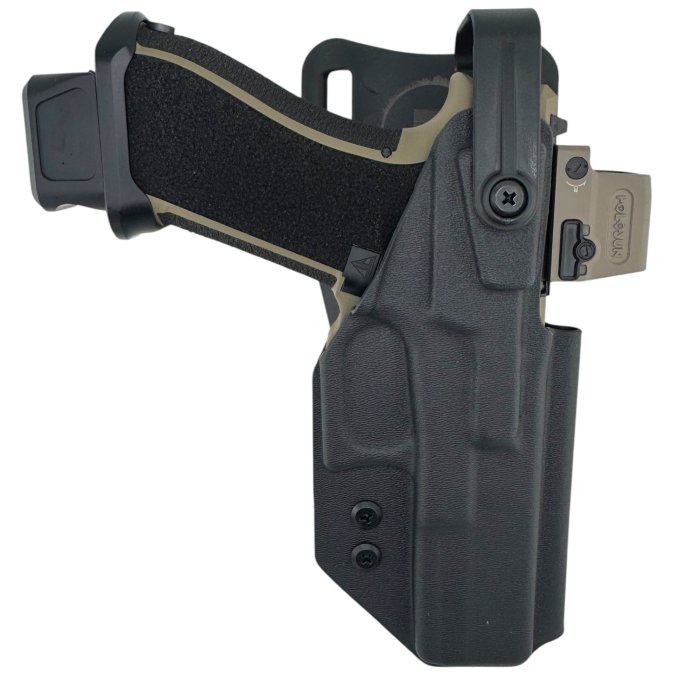
Custom Kydex Holster Lead Times: What to Expect in 2026
The Preventative Maintenance Protocol
This is the part most guides skip. Instead of a vague "clean it sometimes," here's a cadence based on where and how you carry.
Daily carry, indoor/office environment: Wipe the interior with a dry microfiber cloth once a week. Full protocol (below) once a month.
Daily carry, outdoor or dusty environment (construction, agriculture, hiking): Wipe the interior after every carry day. Full protocol weekly. Grit accumulates fast and a single grain dragged across a Cerakoted slide can lift the coating.
Range use: Clean the holster after every range session, without exception. Range dust, unburnt powder, and carbon fouling all collect in the shell and act as abrasive media on the next draw.
Storage: Never store a firearm in a Kydex holster for more than a few days. Long-term storage traps moisture against the finish and lets debris settle into the retention channel.
The Full Cleaning Protocol
Step 1, Dry-wipe the interior. Use a clean, dry microfiber cloth. Work it into the retention channel and the muzzle end of the shell, where grit collects most. Do not use paper towels; they shed fibers that become the next abrasive.
Step 2, Brush the corners. A soft nylon brush (an old toothbrush works) reaches the inside corners and the retention bump where a cloth can't. Brush out, not in, so you push debris out of the shell rather than deeper into it.
Step 3, Blow out residual dust. Canned air or a small air blower clears the fine dust the cloth and brush leave behind. Hold the can upright to avoid propellant spray.
Step 4, Inspect under bright light. Turn the holster upside down under a work lamp. Look for embedded grit, cracks at the retention bump, and any deformation in the shell.
Step 5, Check hardware torque. Retention screws, clip screws, and mounting posts loosen from vibration and repeated adjustment. Snug them, don't crank them. Over-tightening deforms the shell and increases friction on the slide.
Step 6, Reapply threadlocker if needed. Blue (medium-strength) threadlocker is the right choice for holster hardware. Red is too strong, you'll strip the screw before it releases. Reapply when you notice a screw has backed out.
What NOT to Do
- No oil, grease, or silicone spray inside the shell. Lubricants attract and hold dust, turning the holster into a slow abrasive. Kydex is self-lubricating enough; it doesn't need help.
- No solvents. Alcohol, acetone, and gun cleaners can soften or cloud Kydex. Dry cleaning only.
- No heat. Don't leave a Kydex holster on a dashboard or in a hot car. Kydex softens around 200°F, and a deformed shell changes retention permanently.
- No washing in water. Water carries grit into the shell and can leave residue behind. If you must rinse, dry thoroughly and re-inspect.
Hardware Care
Hardware loosens over time from vibration and repeated adjustments. A replacement hardware kit keeps your holster secure and performing consistently. Lindahl Holsters offers a replacement hardware kit designed for IWB configurations, along with blue threadlocker to keep screws from backing out.


Inspect the belt clip for cracks, bends, and wear at the mounting holes. A bent clip shifts the holster's position on the belt, which changes the draw angle and can press the shell against the slide in a new spot, creating a fresh wear pattern where there wasn't one before.
Common Mistakes That Make Kydex Holster Scratches Worse
The biggest mistake is over-tightening retention to "fix" a loose holster. That presses grit harder against the slide and speeds up wear.
Other mistakes that make it worse:
- Cleaning the holster with solvents that soften Kydex
- Ignoring loose hardware until retention fails
- Storing the gun in a dusty holster
- Using the holster as a storage case instead of a carry tool
- Never inspecting the interior after outdoor use
Each of these adds friction, debris, or both. Fix them and your slide finish lasts far longer.
When to Repair, Restore, or Replace Your Holster
Replace the holster when the shell is cracked, deformed, or no longer retains properly. Repair hardware when screws strip or clips wear out. Restore the gun's finish only if cosmetic wear bothers you, since a carry gun will wear again.
Decision guide:
- Loose hardware: Replace screws, posts, and clips. Cheap fix.
- Worn belt clip: Swap it. A standard IWB clip is a few dollars.
- Cracked shell: Replace the holster. Cracks change retention.
- Deep slide gouges: Consider refinishing, then fix the holster cause.
- Worn finish only: Leave it. It's normal and doesn't affect function.
If your holster fits poorly from day one, no amount of maintenance fixes it. Fitment is the foundation. A custom molded holster built for your exact firearm model eliminates most of the gaps where debris collects.
Conclusion
Holster wear is part of carrying a firearm, but the deep scratches people complain about are almost always preventable. Clean the shell, tune retention, and secure your hardware. That's the whole game.
If your current holster keeps scratching your slide, the fit is likely the problem. Lindahl Holsters builds custom Kydex holsters molded to your specific firearm model, with reliable retention and a precise fit that reduces debris gaps. We also stock the small parts that keep a rig running: replacement hardware kits, belt clips, and threadlocker. Orders ship fast, and military, law enforcement, and first responders get a standing discount.
Find your gun model and get a holster that protects your finish instead of wearing it down.
Frequently Asked Questions
Do Kydex holsters scratch your gun?
Yes, Kydex holsters can scratch a gun, especially when grit or debris gets trapped inside the shell. The molded plastic holds its shape and applies consistent friction during the draw stroke, so hard particles act like sandpaper against the slide finish. Proper cleaning and a correctly fitted holster reduce the risk, but some cosmetic wear is normal with daily concealed carry.
How can I minimize friction between my holster and slide?
Start by adjusting retention so the firearm stays secure without excessive drag. Clean the inside of the holster with a soft brush and compressed air to remove grit. Apply a light coat of lubricant to the slide. A smooth, consistent draw stroke also limits surface marring.
Is holster wear considered normal for everyday carry?
Cosmetic wear on a pistol slide is normal for everyday carry, particularly on the high points that contact the holster shell. Finish wear does not usually affect reliability or function. What is not normal is deep gouging, exposed bare metal, or sudden changes in retention. Inspect your holster regularly and address any debris or loose hardware.
Does holster wear affect the reliability of a firearm?
No, holster wear on the slide finish does not affect reliability. The scratches are cosmetic and do not interfere with the firing mechanism. However, if wear exposes bare metal, keep it lightly lubricated to prevent surface oxidation. Functional parts like the barrel, extractor, and trigger group are not affected by holster friction.

