


Olight PL X Holster Review: Best Fits for 2026
Table of Contents
- Why an Olight PL X Holster Needs a Custom Fit
- Holster Compatibility for Weapon Mounted Lights
- Quick Comparison: Top Olight PL X Holsters for 2026
- 1. IWB Kydex Holster for Glock 19 / 19X / 45 with Olight PLX
- 2. Sig Sauer P365 Fuse AXG DH3 with Olight PLX IWB Holster
- 3. Derya DY9 3.86" Olight PL X IWB Kydex Holster
- Custom Kydex Holster for Olight: Retention and Safety
- IWB Holster for Light Bearing: Carry Positions and Comfort
- DIY Adjustment Guide: Fine-Tuning Your Holster
- Holster Maintenance and Cleaning for Long-Term Performance
- Frequently Asked Questions
Last Updated: September 28, 2026
Why an Olight PL X Holster Needs a Custom Fit
An Olight PL X holster must be molded around the specific firearm and light combination it carries, because a weapon-mounted light changes the dimensions, weight distribution, and retention points of the pistol. A holster that fits your gun without the light will not fit it with the light attached. This is the single most common reason concealed carriers end up with a drawer full of holsters that never get worn.
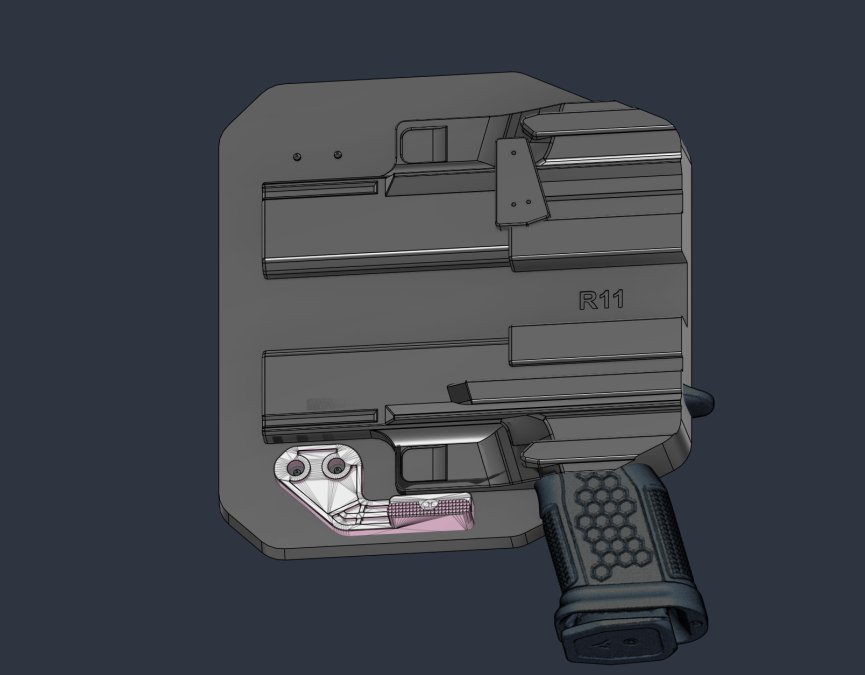
At Lindahl Holsters, we build every holster around the exact firearm and light pairing a customer carries, and the Olight PL X is one of the most requested light bodies we mold for. The reason is simple: the PL X adds a block of material forward of the trigger guard, and that block has to sit somewhere inside the holster shell.
The Problem With Universal Light-Bearing Holsters
Universal light-bearing holsters rely on a friction fit that accommodates a range of lights by leaving extra room inside the shell. That extra room is exactly what causes problems. A pistol can shift inside the holster, retention feels inconsistent, and the trigger guard may not be fully enclosed.
The National Shooting Sports Foundation firearm safety resources consistently emphasizes that a holster should fully cover the trigger guard and hold the firearm securely. A loose, universal fit works against both goals. When a light is mounted, the fit problem compounds because the holster now has two objects to retain instead of one.
A molded fit solves this by matching the shell to the actual contours of your pistol and the Olight PL X. There is no dead space for the gun to move, and retention stays consistent from the first draw to the thousandth.
Holster Compatibility for Weapon Mounted Lights
Holster compatibility for weapon mounted lights comes down to three variables: the pistol model, the exact light model, and whether the holster was molded for that specific pairing. Get any one of those wrong and the holster will not work.
The Olight PL X is a compact light, but "compact" does not mean universal. Other lights with similar dimensions are not guaranteed to fit a holster molded for the PL X, and a holster molded for a different Olight model will not accept the PL X. Olight's own product documentation is the right place to confirm the exact model designation before ordering anything.
Here is what actually determines fit:
- Pistol model and barrel length. A Glock 19 holster will not fit a Glock 45 with a different slide length, even though the frames are similar.
- Light model. PL X, PL-X, and PL X are the same light; other Olight models are not.
- Muzzle and slide geometry. Compensators, threaded barrels, and aftermarket slides change the footprint and usually require a different mold.
- Optic and sight height. An optic cut or suppressor-height sights change how much clearance the holster needs.
Quick Comparison: Top Olight PL X Holsters for 2026
The three holsters below are the current Lindahl Holsters lineup molded specifically for the Olight PL X. Each is an inside-the-waistband Kydex design at $62.99, and each is built for a different pistol platform.
| Holster | Pistol Platform | Carry Style | Price | Best For |
|---|---|---|---|---|
| Glock 19 / 19X / 45 IWB Kydex | Glock 19, 19X, 45 | IWB, appendix or strong side | $62.99 | Most common carry setup |
| Sig Sauer P365 Fuse AXG DH3 IWB | Sig P365 Fuse AXG DH3 | IWB | $62.99 | Sig owners wanting a slim profile |
| Derya DY9 3.86" IWB Kydex | Derya DY9 3.86" | IWB, appendix or strong side | $62.99 | DY9 owners with the PL X mounted |
All three share the same construction: .08" Kydex, adjustable retention, full trigger guard coverage, and a molded fit around the PL X. The difference is the pistol they are built for.

1. IWB Kydex Holster for Glock 19 / 19X / 45 with Olight PLX
The Glock 19, 19X, and 45 share a frame, which means one holster mold covers all three. That is the practical reason this is the most popular Olight PL X holster we build. If you carry any of those three pistols with a PL X mounted, this is the straightforward answer.

The shell is precision molded for the pistol and light combination, so the PL X sits in a dedicated channel rather than a generic pocket. Retention is adjustable, and you can tune it until you get a secure hold with an audible click on re-holster.
Pros and Cons
Pros:
- One mold fits Glock 19, 19X, and 45
- Adjustable retention, ride height, and cant
- Optics-ready and suppressor sight compatible
- Full trigger guard coverage
- Made in the USA
Cons:
- Does not fit Glock models outside the 19/19X/45 frame family
- Aftermarket slides and frames may affect fitment
2. Sig Sauer P365 Fuse AXG DH3 with Olight PLX IWB Holster
Sig's P365 Fuse AXG DH3 has an aluminum grip module and a longer slide than the standard P365, which is why a holster molded for the base P365 will not work. This model is built specifically for the Fuse AXG DH3 with the PL X mounted.
Pros and Cons
Pros:
- Molded specifically for the P365 Fuse AXG DH3 with PL X
- Slim IWB profile for concealed carry
- Durable Kydex construction
- Made in the USA
Cons:
- Does not fit standard P365, P365 XL, or other AXG variants
- Does not accept other weapon lights
3. Derya DY9 3.86" Olight PL X IWB Kydex Holster
Derya DY9 owners have fewer holster options than Glock or Sig shooters, which is why this model exists. It is molded around the DY9 3.86" slide, frame, trigger guard, and the mounted PL X, so nothing is left to a generic fit.

Pros and Cons
Pros:
Derya DY9 3.86" Olight PL X IWB Kydex →
- Purpose-built for the DY9 3.86" with PL X
- Closed-end muzzle for barrel protection
- Full sweatshield for slide coverage
- Suitable for appendix or 3-4 o'clock carry
Cons:
- Does not fit the DY9 without the PL X installed
- Does not fit other Derya models or different barrel lengths
Custom Kydex Holster for Olight: Retention and Safety
A custom Kydex holster for Olight lights works because the shell is formed around the light body itself, not around a generic light-shaped void. That is the difference between passive retention and a fit you can trust.
IWB Holster for Light Bearing: Carry Positions and Comfort
An IWB holster for light bearing carry works best when the carry position matches your body type and your daily movement, not when you copy someone else's setup. The Olight PL X adds roughly an inch of length and a few ounces forward of the trigger guard, and that extra footprint is what changes the math on comfort. Most guides stop at "try appendix, try strong side." The real work is matching the light's footprint to your torso length, waist shape, and how you sit for a living.
How the PL X Footprint Changes Each Position
- Appendix (1-2 o'clock). The light body sits forward of the hip and slightly below the belt line. On a longer torso, the shell rides flat against the abdomen and disappears under a t-shirt. On a shorter torso, the same rig sits lower and the light's bezel can press into the crease of the thigh when you sit. The fix is usually a ride-height adjustment (raise the clip one hole) plus a small wedge or pillow at the muzzle end to tip the grip into the body.
- Strong side (3-4 o'clock). The light sits on the outer curve of the hip, which is the most forgiving spot for the added bulk. Printing is driven by the grip, not the light, so a 10-15 degree forward cant does more for concealment here than any other single change. This is the position most carriers with a shorter torso or a heavier build settle on.
- Behind the hip (4-5 o'clock). The light body sits over the glute, which is comfortable for driving and sitting but slow to access and hard to defend in a close-quarters situation. The PL X's length can also catch on seat bolsters when you exit a vehicle.
Matching Position to Body Type
There is no universal answer, but a few patterns hold up across most carriers:
- Longer torso, average or slim build. Appendix usually conceals best because the shell has room to sit flat. The PL X's length is an advantage here, it gives the rig more surface area to grip the belt line.
- Shorter torso. Appendix often prints at the belt line because the grip rides above the waistband. Strong side at 3-4 o'clock with a forward cant is usually the easier fit.
- Heavier build or a belly. Appendix can work, but the light tends to dig in when seated. A higher ride height and a wedge at the muzzle end relieve most of the pressure. Strong side is the lower-effort option.
- Slim build with a prominent hip bone. Strong side can create a hot spot where the light body meets the hip. Behind the hip or a slightly higher appendix rig usually solves it.
The Adjustments That Actually Matter
Ride height and cant are worth more than any single "best" position. A 15-degree cant change can be the difference between a holster you wear daily and one you leave in the drawer. If you sit for hours at a time, raise the ride height before you change anything else, the light's bezel is what digs in, and moving the shell up an inch usually clears the thigh entirely.
Printing and the Light
The PL X itself rarely prints. What prints is the grip, because the light pushes the whole rig slightly forward and tips the grip away from the body. A wedge or pillow at the muzzle end rotates the grip back toward your torso, and a claw or wing on the holster does the same job from the belt side. Both are cheap additions and both do more for concealment than switching positions.
When to Change Positions
If you have adjusted retention, ride height, and cant and the rig still digs in, prints badly, or slows your draw, the position is wrong for your body, not the holster. Most carriers land on appendix or strong side within the first two weeks and stay there. The PL X's footprint makes the choice more consequential than it is for a bare pistol, so give yourself permission to try both before committing.
DIY Adjustment Guide: Fine-Tuning Your Holster
Fine-tuning a Kydex holster takes about 15 minutes and a screwdriver. Every adjustable feature on these holsters exists so you can match the rig to your body, and most people never touch them. The PL X adds one wrinkle: the light body is now a retention surface, so any adjustment you make has to be tested against the light as well as the trigger guard.
Safety First: Re-Holstering With a Mounted Light
This is the step most guides skip, and it is the one that matters most. A weapon-mounted light sits forward of the trigger guard, which means the holster mouth has to open wide enough to accept the light body before the trigger guard ever enters the shell. If the mouth is too tight or the light is misaligned, the pistol can hang up at the light and you will be tempted to force it, with your hand over the muzzle.
The safe sequence:
- Look the pistol into the holster. Never re-holster blind with a light mounted. Watch the light body enter the mouth first, then the trigger guard.
- Keep your thumb and fingers clear of the mouth. The light body creates a wider opening, which also means more room for a garment or finger to enter.
- If it hangs up, stop. Remove the pistol, check the shell for debris or a bent clip, and try again. Forcing it is how the shell cracks and how fingers end up in front of the muzzle.
- Never adjust retention with a loaded pistol in the holster. Back the screw out with the gun removed, make the change, then reinsert the unloaded firearm to test.
Step-by-Step Adjustment
Work through it in this order. Changing two things at once makes it impossible to tell which adjustment fixed the problem.
- Set retention first. With the pistol unloaded and removed from the holster, tighten the retention screw until the shell grips firmly, then back it off a quarter turn. Insert the unloaded pistol and test the draw. You want a secure hold with a clean release and an audible click on re-holster. If the click is faint, the screw is too loose; if the draw feels gritty, it is too tight.
- Adjust ride height. Move the clip up or down until the grip sits where your hand naturally finds it. Too high and the grip digs into your ribs; too low and you cannot get a full firing grip on the draw. On a light-bearing rig, raising the ride height also lifts the light bezel off your thigh when seated.
- Set cant. Rotate the clip to change the draw angle. Appendix rigs usually run close to vertical; strong-side rigs often run 10-15 degrees of forward cant. Mark the clip position with a pencil before you loosen it so you can return to a known setting.
- Check the draw stroke. Draw slowly and watch where the pistol catches. If it drags at the light body, the shell is gripping the light too hard, back the retention screw off an eighth of a turn. If it drags at the trigger guard, the cant is fighting your wrist angle.
- Re-holster deliberately. Practice re-holstering with the unloaded pistol, watching the light into the holster first, then the trigger guard. Never rush this step.
- Wear it for a day before changing anything else. Kydex breaks in slightly, and a rig that feels tight on day one often settles by day three.
Hardware That Stays Put
Vibration from daily carry loosens screws. A drop of blue threadlocker (medium strength, removable) on the retention screw keeps it where you set it without making it permanent. Do not use red threadlocker, it requires heat to break and you will strip the screw head trying to adjust retention later. Check the clip screws at the same time; a loose clip is the most common cause of a holster that suddenly rides differently.
When to Stop Adjusting
If you have set retention, ride height, and cant and the rig still feels wrong, the problem is usually the position, not the hardware. Go back to the carry-position section and try a different spot on the belt before you touch another screw. Kydex does not stretch, so no amount of adjustment will fix a shell that was molded for the wrong pistol or light.
Holster Maintenance and Cleaning for Long-Term Performance
Holster maintenance is the part almost nobody talks about, and it is the reason some holsters still feel new after years while others loosen up in months. Kydex is durable, but it is not maintenance-free.
Frequently Asked Questions
What holsters fit the Olight PL-X?
Holsters for the Olight PL-X must be molded specifically for that light and your exact firearm model. Lindahl Holsters makes custom Kydex fits for the Glock 19/19X/45, Sig Sauer P365 Fuse AXG DH3, and Derya DY9 3.86". Each is vacuum-formed around the gun and light together, so the Olight PL X holster locks onto the light's contours for consistent retention. Universal light-bearing holsters often fit loosely and can shift during carry.
Does the Olight PL-X require a specific light-bearing holster?
Yes. The Olight PL-X adds width and length to your pistol's profile, so a standard holster will not accommodate it. You need an IWB holster for light bearing that is molded for the PL-X's exact dimensions. A dedicated light-bearing holster also protects the light's lens and controls from debris and impact. Using a non-light-bearing holster with the PL-X attached can damage the holster or create unsafe retention.
Can I use a standard holster with an Olight PL-X attached?
No, a standard holster will not work. The Olight PL-X extends below the trigger guard and widens the frame, so the pistol will not seat fully. Forcing it can crack the Kydex or leather and leave the trigger exposed. You need a holster compatibility for weapon mounted lights, meaning the holster is molded for both your gun and the PL-X. Attempting to modify a standard holster usually ruins retention and voids warranties.
How do I adjust retention on a custom Kydex holster for Olight?
Most custom Kydex holster for Olight models use a Phillips or hex screw near the trigger guard. Tighten it clockwise in quarter-turn increments until the pistol clicks securely into place. You should be able to hold the holster upside down and shake it gently without the gun falling out, but you still need a smooth draw. Test by drawing and re-holstering ten times. If it feels too tight, back the screw off an eighth of a turn.
Will a light-bearing holster work for appendix carry?
Yes, many IWB holster for light bearing designs work well for appendix carry. The key is a slim Kydex profile and a full sweatshield to keep the light's bezel from digging into your thigh. Lindahl Holsters models for the Olight PL X include adjustable ride height and cant, so you can angle the grip to reduce printing. Test your draw stroke from appendix with an unloaded firearm before carrying live.

